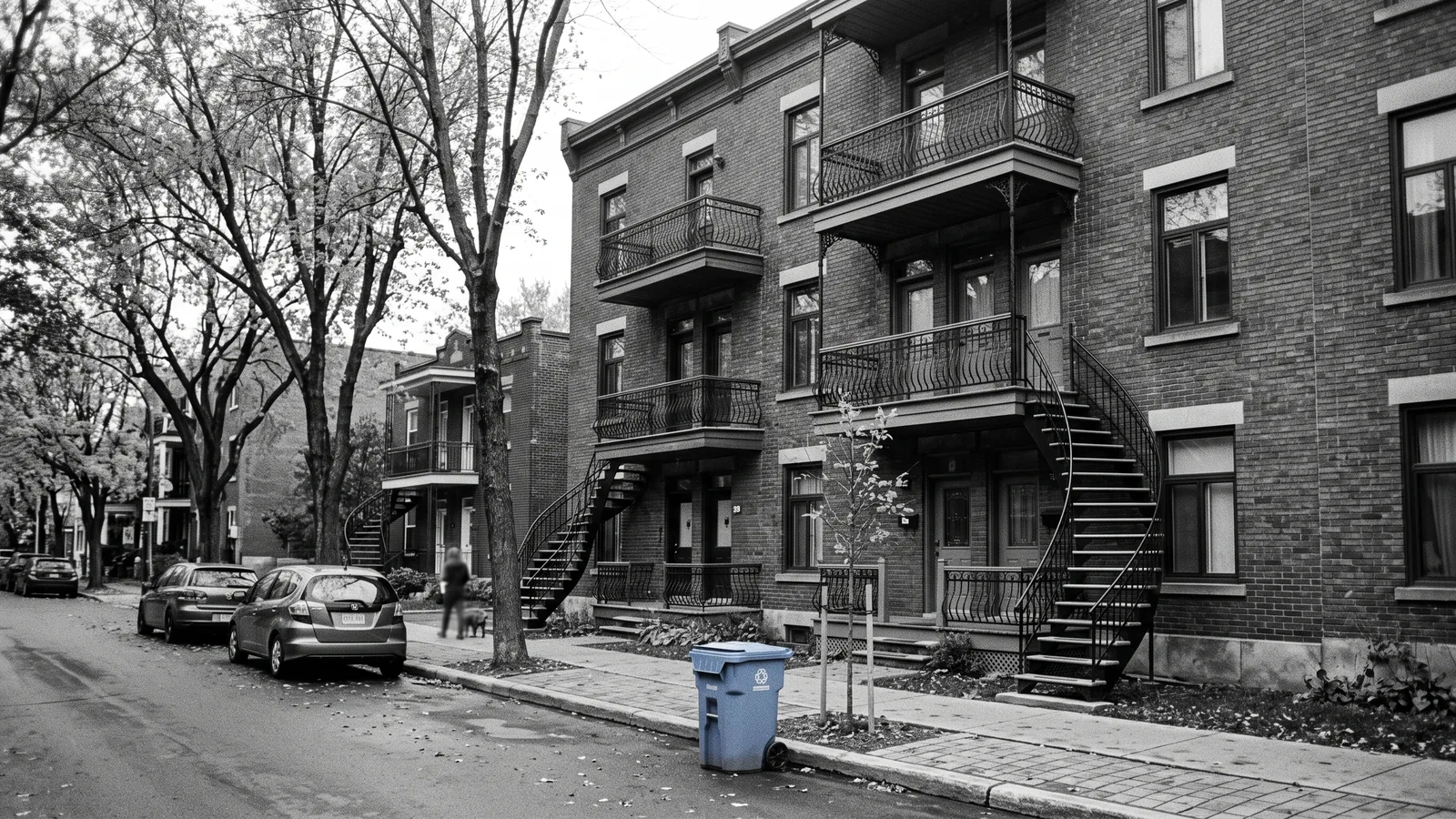
The true market value of your unit's rent is the amount a new tenant would agree to pay today for an equivalent unit in your area. You don't read it off your current lease: you calculate it by comparing your unit to similar ones recently listed in the same neighbourhood — same number of bedrooms, comparable size and condition — then adjusting for inclusions like utilities, parking, and amenities. Here's the method, step by step, with a worked example.
In this article
The method in brief
Estimating market rent is no mystery: it's the same comparables logic brokers and appraisers use for a sale price, applied to rent. You gather several similar units listed recently, make them comparable by adjusting the differences, then take the median. The result is a realistic range — not a magic number, but a defensible estimate grounded in what the market is actually asking right now.
Key takeaway
The market value of a rent is measured against comparable units currently listed, not against your old lease or the rent your sitting tenant pays. Compare the same number of bedrooms, similar size and condition, in the same neighbourhood.
Why the current rent isn't a good gauge
This is the most common mistake: believing the rent on the lease reflects the value of the unit. It mostly reflects the unit's history. A long-time tenant has seen their rent rise through small annual increases, often well below the market's real progression. After five, ten, or fifteen years, the gap can grow considerable — without anything "abnormal" having happened.
The current rent tells you what you collect today. It doesn't tell you what the unit would fetch if it were listed vacant, now, on Centris or Marketplace. There's no reason those two figures should be equal, and in a tight market like Montréal's, they often drift apart year after year. To know the market value, you have to look elsewhere: at the active supply.
Finding reliable comparables
A good comparable is a unit that could compete with yours in the eyes of a tenant searching today. You find them in active listings, not in old leases:
- Centris: broker-listed units for rent, often well documented (size, inclusions, photos).
- Kijiji and Facebook Marketplace: the bulk of the peer-to-peer rental market, very up to date.
- "For rent" signs and neighbourhood groups, useful for your immediate area.
Aim for 5 to 10 recent listings (from the past few weeks), in the same neighbourhood or a genuinely comparable area. Be wary of provincial averages and headlines: they give a trend, but not the value of your unit. Market data published by APCIQ (the Québec Professional Association of Real Estate Brokers) is helpful for situating the general trend by region, but the fine estimate always rests on local comparables.
The 6 steps to calculate market value
Here's the full process, in order:
- Describe your unit precisely: number of bedrooms, approximate size, floor, condition (renovated or not), and what's included (heating, electricity, parking, appliances).
- Gather 5 to 10 recent comparables listed in the same neighbourhood on Centris, Kijiji, and Marketplace.
- Filter to keep only genuinely similar units: same number of bedrooms, comparable size and condition.
- Adjust each comparable for its differences from yours (included utilities, parking, renovations, balcony). This makes them "equivalent."
- Take the median of the adjusted rents: that's your central estimate. The lowest and highest values form your range.
- Validate with the per-bedroom benchmark, then compare to the current rent: the gap is the value to recover.
This method works because it neutralizes outliers. A single listing may be overpriced or underselling a unit; the median of several adjusted listings smooths out those extremes and gives you a solid figure.
Adjusting for utilities, parking, and amenities
Two units with the same number of bedrooms aren't necessarily worth the same. Before comparing rents, you have to put the listings on equal footing by accounting for what's included. The items that move the rent the most:
- Heating and electricity included: an "all-inclusive" unit commands a higher rent than an identical one where the tenant pays their own utilities.
- Parking: a parking spot, especially in dense areas, has real monthly value.
- Appliances, washer-dryer, air conditioning: each amenity justifies a premium.
- Condition and renovations: redone kitchen and bathroom, new floors — a renovated unit compares poorly to an original one.
The principle is simple: if a comparable includes heating and yours doesn't, subtract the value of heating from its rent before comparing. Conversely, add the value of an inclusion your unit offers that the comparable lacks. That way you compare apples to apples.
The per-bedroom benchmark
A useful shortcut to validate your estimate: the price per bedroom. Divide each comparable's rent by its number of bedrooms, and you get a benchmark that transfers well from one unit to another, even when sizes vary a little.
This benchmark isn't an absolute rule: a bedroom in a large, bright unit isn't worth the same as a tiny windowless one. But as a cross-check of your median, it's valuable and fast.
Worked example: a 4½ in Montréal
Let's take an illustrative case to see the method in action. The figures below are examples; they are not official statistics.
You own a 4½ (two bedrooms) rented at $1,050 to a long-time tenant. You pull six recent listings for comparable 4½ units in the neighbourhood: $1,450, $1,500, $1,600, $1,550, $1,650, and $1,500.
Two listings include heating: you subtract its value to make them comparable to yours, which doesn't include it. After adjustment, the median settles around $1,550.
The per-bedroom benchmark (about $775 per bedroom for a two-bedroom) confirms the range. The gap with the current rent is $500 per month, or $6,000 per year — that's the market value your unit isn't capturing today.
This gap isn't just a monthly shortfall: it also weighs on your building's value, since that value depends directly on net income. To see the full effect, read "Below-market rents: the hidden fortune in your building."
Quantifying the gap precisely
Doing the exercise yourself gives a good estimate. But between a rough range and a precise figure, the difference can amount to thousands of dollars per year — and even more on resale or refinancing value. That's where a professional assessment changes things.
At Opti Loyer, the free audit quantifies the gap between your current rent and market value, comparable by comparable, for your exact area. You get a defensible amount rather than a hunch — and the roadmap to capture it legally, through the channels permitted in Québec.
Knowing the true market value of your rent is the first business decision to make on an income property. Without that figure, you're flying blind; with it, you know exactly what there is to recover and can act accordingly, cleanly and through the means the law allows.
This article is provided for informational purposes and does not constitute legal advice or an official appraisal. Market conditions vary by area and over time; always validate your figures against up-to-date comparables.