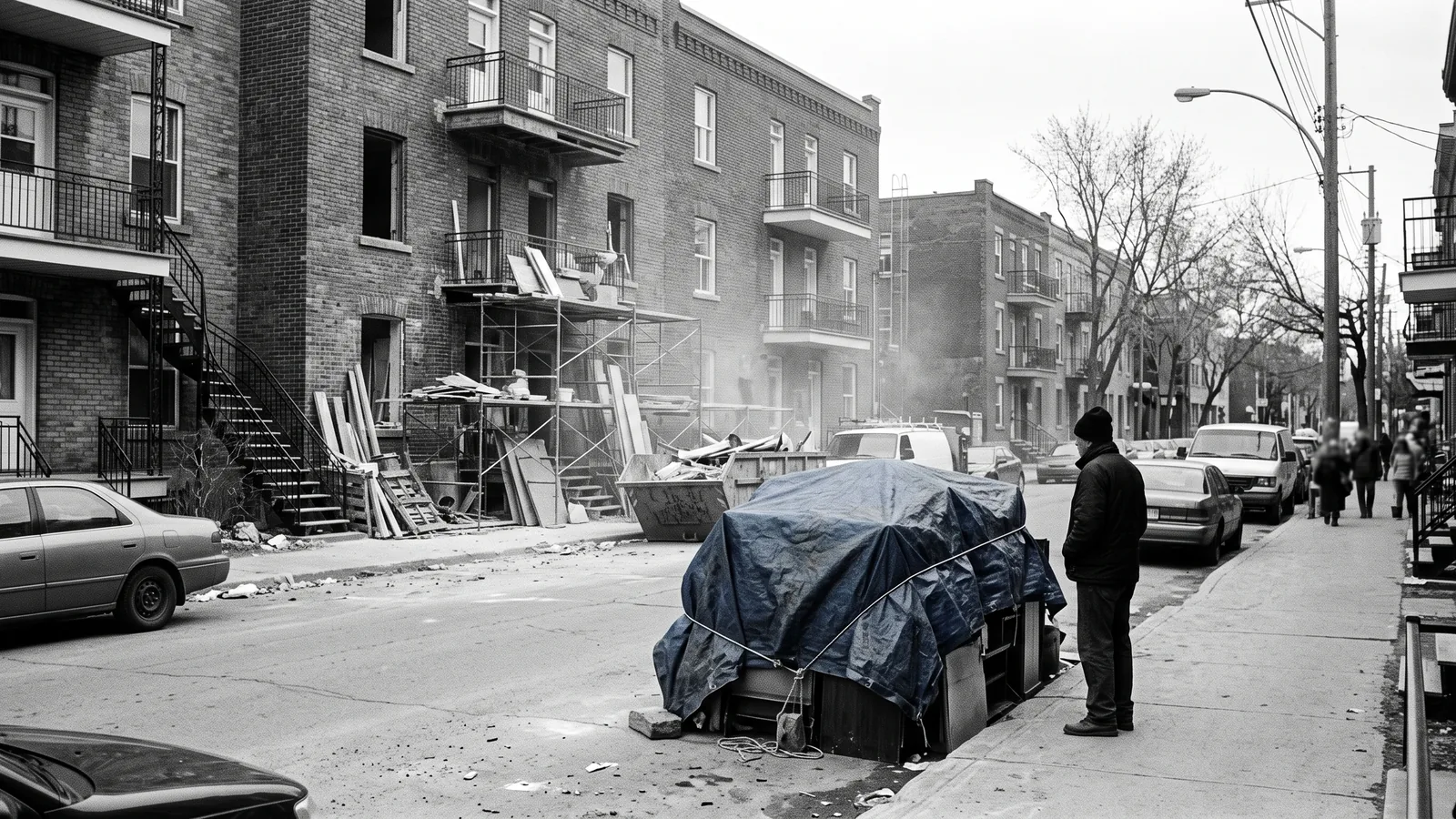
“ Renoviction ” is a word you have probably already read in the newspapers : the blend of “ renovation ” and “ eviction ” that describes a practice which has become a symbol of the tensions in Québec's rental market. The idea seems simple, almost appealing to a landlord whose dwelling is stuck far below market : you invoke work, you make the tenant leave, you renovate, you re-rent for much more. On paper, the equation is attractive. In real life, it backfires on the person who tried it far more often than one imagines — because a renoviction, when it rests on a pretext, is a bad-faith eviction, and Québec's rental board (the TAL) treats it as such. This article explains why these manoeuvres end badly, what they really cost, and how to reach exactly the same goal — recovering and optimizing a dwelling — legally, without gambling your reputation or your wallet on a shortcut.
In this article
- What is a renoviction — and when does it become illegal ?
- Why so many landlords are tempted by it
- The many faces of illegal renoviction
- The consequences : why it ends badly
- Why “ doing it right ” takes professionals
- The legal way to recover a dwelling
- The Opti Loyer approach : pay only for results
- In short : the shortcut is no shortcut
What is a renoviction — and when does it become illegal ?
Let's start by cleaning up the vocabulary, because that is where most misunderstandings arise. The word “ renoviction ” appears nowhere in the Civil Code of Québec or in the housing legislation. It is a journalistic term, coined to name a phenomenon : the eviction of a tenant disguised as a renovation project. The word therefore has no legal definition, but the reality it points to falls under very concrete rules.
The nuance to grasp is this : renovating is not illegal ; evicting under a false pretext is. A landlord has every right to maintain and improve their building. There are even cases in the law where genuine major work — a subdivision, a substantial enlargement, a change of use that makes the dwelling uninhabitable during the work — can justify an eviction, provided a formal notice, deadlines and the tenant's right to refuse or challenge are respected. That is not what people are talking about when they denounce a “ renoviction ”.
The red line : the true intent
What tips a process from legal into illegal is not the presence of work : it is the true intent behind the eviction. When the work is a pretext — fictitious, cosmetic, exaggerated, or scaled up just enough to justify a departure — and the real goal is to recover the dwelling in order to re-rent it at a higher price, you are no longer dealing with renovation : you are dealing with a bad-faith eviction. The TAL, when seized, seeks precisely to unmask that intent. A real, documented, coherent work project can be defended ; a vague project, cobbled together for the occasion, of which no trace can be found afterward, collapses under scrutiny.
In other words, illegal renoviction is not a fuzzy category of the “ not quite right ”. It is the diversion of a legitimate mechanism — eviction for work, or repossession of a dwelling — toward ends it was never meant to serve. And like any diversion, it leaves traces : that is precisely what makes it fragile.
Renoviction, repossession, eviction : three different things
Everyday language freely mixes three notions that do not overlap :
- Repossession of a dwelling allows the landlord to take back a dwelling in order to live there themselves or to house an eligible relative. It rests on a housing need, not on work. We devote a full guide to it : “ Repossession of a dwelling in Québec ”.
- Eviction for major work targets the dwelling itself — subdivision, enlargement, change of use — and is subject to its own rules, notices and deadlines.
- “ Renoviction ” is not a legal category : it is one or the other of these mechanisms used in bad faith, as a cover to empty and re-rent.
A tenant in good standing, who pays their rent and abides by their lease, cannot be evicted for a fault : there is none. For such a tenant, the only real avenues are an authentic eviction or repossession (therefore regulated and open to challenge), or the voluntary move-out agreement. Everything else — pretext work, pressure, harassment — falls outside the legal framework.
Key takeaway
Renoviction is not a legal term, but the phenomenon it describes is well regulated : renovating is allowed, evicting under a false pretext of work is not. What distinguishes the legal from the illegal is the sincerity of the intent — and that is exactly what the TAL examines.
Why so many landlords are tempted by it
To understand why these practices exist, you have to put yourself in the shoes of the landlord involved — not to excuse the manoeuvre, but to look honestly at what motivates it. Illegal renoviction is almost never the work of ill-intentioned people from the start : it is most often the product of a real frustration poorly channelled.
Rent frozen far below market
In Québec, a tenant who stays a long time in their dwelling sees their rent rise slowly, at the pace of the annual increases. Over the years, the gap widens between this “ historical ” rent and the price the same dwelling would fetch if it were put back on the market today. For some dwellings, this gap becomes considerable : we are easily talking about several hundred dollars a month, sometimes more. Multiplied over years, it is a shortfall that weighs heavily, especially when taxes, insurance and maintenance keep rising without waiting.
The landlord then looks at their dwelling and sees dormant value : an asset that would be worth much more if it could be brought up to date and re-rented at its fair price. This observation is perfectly legitimate. The problem is not wanting to recover this value ; the problem is the means chosen to get there.
The illusion of the shortcut
This is where temptation sets in. Recovering a dwelling occupied by a tenant in good standing is difficult through the normal channel : the right to remain in the premises is strong, and there is no “ recover my dwelling ” button a landlord could press. Facing this wall, some convince themselves that a pretext — work, a repossession for a relative who will never move in — will be faster than a negotiation. The idea circulates : “ I invoke renovations, the tenant will leave, and it'll be sorted. ”
This logic rests on two risky bets. The first : that the tenant will not know their rights or will not dare to assert them. The second : that no one will check, afterward, whether the work actually took place. Yet both bets are increasingly losing ones. Tenants are better informed than before, advocacy associations are active, and the TAL — like the media — takes a close interest in these cases. The shortcut that was supposed to save time then becomes the longest and most expensive of routes.
The many faces of illegal renoviction
Renoviction does not take a single form. It comes in several manoeuvres, some of which seem harmless but all share the same flaw : they seek to obtain a departure without the tenant's free and informed consent, relying on a reason that is not the true one. Here are the main ones.
Pretext work
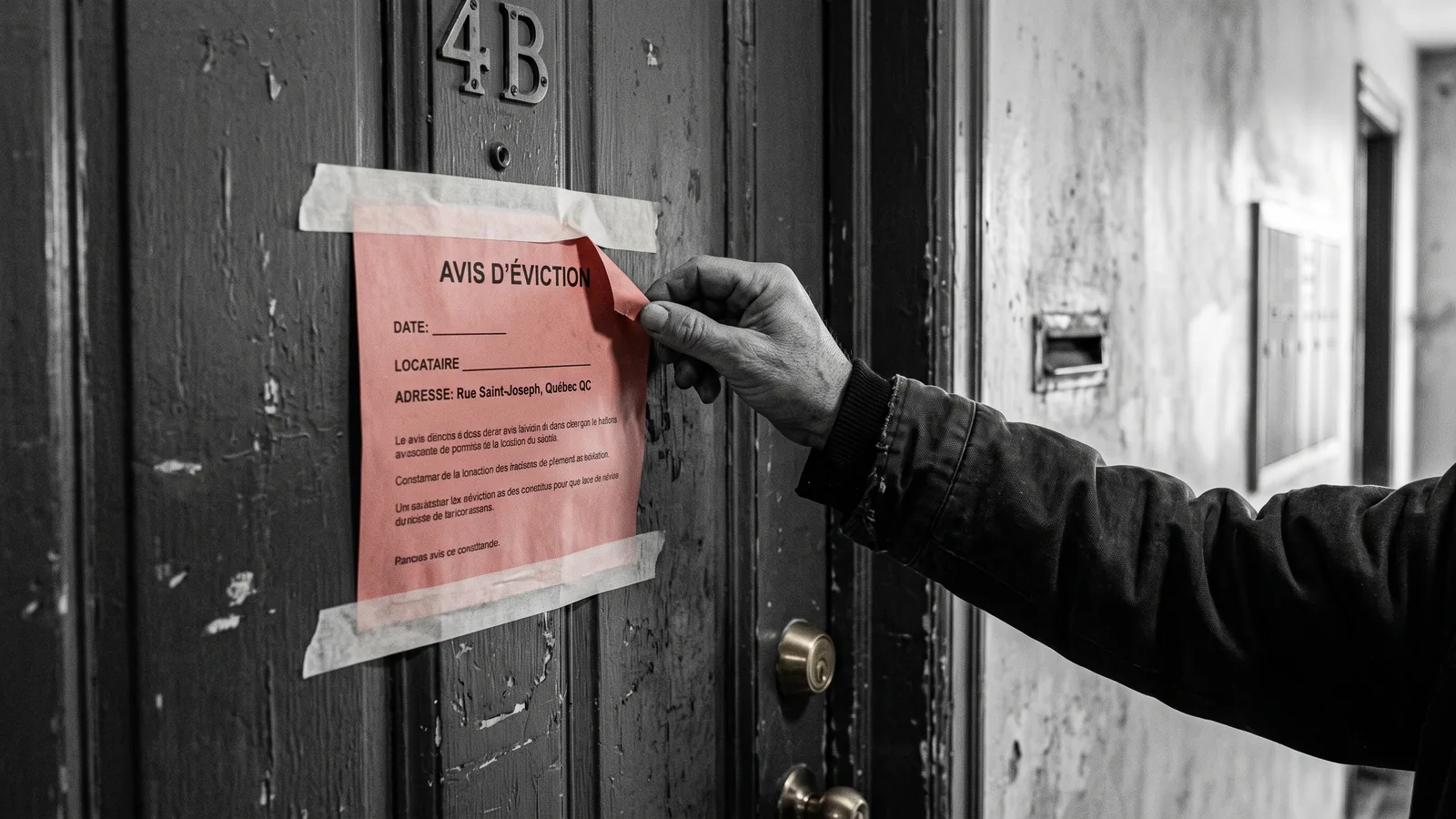
This is the archetypal form, the one that gave the phenomenon its name. The landlord announces major renovations that would make the dwelling uninhabitable, obtains or forces the departure… then the promised work never arrives, or is limited to a cosmetic refresh — paint, countertop, flooring — that would never have justified an eviction. The dwelling is then re-rented, barely touched up, at a markedly higher price. When the TAL examines this type of case, the gap between the announced work and the work actually carried out speaks for itself.
The false repossession of a dwelling
Another variant : invoking a repossession of a dwelling for a relative — a child, a parent — who never had any real intention of living there. The tenant leaves, the “ relative ” does not move in, or stays only long enough to keep up appearances before the dwelling is re-rented to a third party, for more. It is a bad-faith repossession, and it is treated with the same severity as pretext work. The seriousness of the occupancy project is precisely what the tribunal verifies ; a façade beneficiary does not withstand scrutiny.
Harassment and pressure
More insidious is the strategy of making the tenant's life unpleasant enough that they leave “ on their own ”. Multiplying visits, intimidating notices, unreasonable demands ; hinting, barely veiled, that it “ would be better ” to leave ; creating a permanent climate of tension. Harassing a tenant is expressly prohibited, and a tenant who is subjected to it can apply to the TAL to make it stop and claim compensation. Pressure applied to provoke a departure is not a voluntary departure : it is the exact opposite.
Deliberate neglect and cutting off services
Finally, there is the tactic of attrition : knowingly neglecting repairs, letting problems drag on, even reducing or cutting off services to make the dwelling unpleasant to live in. Not only does this breach the landlord's maintenance obligation, but used with the aim of pushing a tenant out, it adds to the picture of a disguised eviction. Here again, the tenant has recourse, and the landlord risks having to repair far more than they would have spent on normal maintenance.

The consequences : why it ends badly
Here is the heart of the matter. People often imagine renoviction as a “ low-risk ” bet : at worst, they tell themselves, the tenant will stay. In reality, the range of consequences is far broader and far more costly than that “ at worst ”. Here is what concretely awaits a process that derails.
The challenge before the TAL and the shift of the burden
As soon as a tenant refuses an eviction or repossession notice — and often, mere silence within the prescribed time amounts to a refusal — the landlord cannot force the departure on their own authority. They must apply to the TAL and request authorization. And there, the burden shifts : it is up to the landlord to demonstrate that the process is genuine, serious and in good faith. A tenant can also be the applicant : filing a complaint for harassment, for pretext work or for a bad-faith eviction. In both cases, the landlord ends up having to prove the sincerity of a reason that, if it was a pretext, does not hold up.
Damages, punitive damages and fines
When bad faith is established, the financial consequences pile up. The law provides that the wronged tenant may obtain damages for the harm suffered — the costs, the inconvenience, the loss of a dwelling. To this may be added punitive damages, whose function is precisely to penalize and deter this type of behaviour. Finally, the regulations provide for fines for certain prohibited practices. We do not give precise amounts here : they depend on the case and on the applicable scales, and a wrong figure would be worse than useless. But the order of magnitude is clear — the total frequently exceeds, by far, the hoped-for gain from the shortcut.
The tenant's reinstatement
Here is the consequence that few landlords anticipate, and that hurts the most : in some cases of bad-faith eviction or repossession, the TAL may, depending on the circumstances, order the reinstatement of the tenant in their dwelling. In other words, after months of proceedings, costs and energy, not only has the landlord failed to recover their dwelling to re-rent it for more — they must bring back the tenant they had made leave, while compensating them. The dwelling believed to be “ recovered ” slips away a second time. It is the clearest illustration of “ it ends badly ”.
Reputation : the cost you never get back
There is, finally, a consequence that appears on no invoice, but that sometimes weighs more heavily than all the others : reputation. This type of case regularly makes headlines. A landlord named in a report on renovictions, cited in a public TAL decision, denounced on social media or by a tenants' association, carries that label for a long time. In a world where relationships, partners, lenders and future tenants do their homework, a tarnished reputation costs opportunities that are never fully quantified. A reputation is built over years ; it is demolished in a single case.
Why “ doing it right ” takes professionals
After reading the above, a well-meaning landlord might conclude : “ fine, I'll just do things by the book myself. ” The intention is right. But you have to be clear-eyed on one point : between the intention to do the right thing and a process that actually holds up, there is a mass of technical details, any one of which can, on its own, derail the whole thing.
Every detail counts, and just one is enough to compromise everything
Think of everything that must be exact : the form and content of each notice, the deadlines — which vary by type of lease and change over time —, the correct identification of the reasons, the proof of good faith, the documentation of the project, the compliance of the procedure, and, in the case of an agreement, the drafting of the document that protects both parties. A notice sent a little too late, a poorly identified beneficiary, an ambiguous clause in an agreement, a clumsily conducted negotiation that leaves the tenant feeling rushed : any of these missteps can turn a legitimate process into a fragile case, even into a dispute. It is not bad faith ; it is amateurism, and the result can be just as costly.
The difficulty is that these rules cannot be improvised and are not set in stone : they require knowing the TAL's current practice, knowing what convinces a tribunal and what worries it, and drafting documents that leave no opening. It is a profession. Doing it halfway, relying on a template found online or on a piece of hallway advice, amounts to building on sand.
You only have one name in life
There is an even deeper reason to entrust this kind of process to professionals, and it comes down to one sentence : you only have one name in life. A landlord's reputation — with their tenants, their partners, their lenders, their community — is a precious and fragile asset. It is built slowly, through consistency and fairness, and destroyed quickly, by a single mishandled case. Gambling that reputation on a shortcut, to save a few weeks or a few thousand dollars, is a losing bet even when “ it works out ” : the risk is never proportionate to the gain.
Doing things properly is therefore not only about respecting the law : it is about protecting that name. And the surest way to protect it is to surround yourself with people whose very profession is to carry out these processes cleanly, from A to Z, without exposing the landlord.
The legal way to recover a dwelling
Let's get to the most useful part : how to obtain exactly what a renoviction aims for — recovering a dwelling frozen below market to restore it to its fair value — without any of the risks. The answer comes down to two words : voluntary agreement. Rather than imposing a departure under a pretext, you obtain a departure or a renegotiation by mutual agreement, with the tenant's free consent. Two main tools exist.
Cash for keys : paying for a departure, amicably
Cash for keys is a negotiated lease termination : the tenant agrees to end the lease and leave the dwelling on an agreed date, in exchange for compensation. Everything is in writing, everyone signs, and — this is the essential point — the tenant is never forced : they agree because it is in their interest. Since both parties agree, there is no reason to invent, no burden of proof, no possible challenge before the TAL. It is the exact opposite of a renoviction : where the latter rests on an imposed pretext, cash for keys rests on transparent consent.
For a dwelling stuck far below market, it is often the most profitable decision a landlord can make. Recovering the dwelling cleanly, bringing it up to date and re-renting it at its fair value creates value that frequently runs into the tens of thousands of dollars on the asset — with no dispute, no risk of reinstatement, no headlines. We detail the legality, the calculation and the mechanics in our guide “ Cash for keys in Québec ”.
Cash for raise : renegotiating rather than emptying
Sometimes the goal is not even to recover the dwelling, but simply to correct a rent that has become too low. In that case, emptying the dwelling would be absurd : why pay for a departure and renovate if the current tenant is good and you only want to bring the rent up to date ? This is where cash for raise comes in : a voluntary agreement by which the tenant accepts a negotiated rent increase, often in exchange for a benefit. The tenant stays, the rent moves closer to market, and no one is displaced. It is the gentlest optimization there is — and the most legal.
Legal versus illegal : the comparison that says it all
| Illegal renoviction | Voluntary agreement (cash for keys / raise) | |
|---|---|---|
| Basis | An imposed pretext (false work, false repossession) | The tenant's free consent |
| Tenant's consent | Absent or extorted through pressure | Required : they agree because they benefit |
| Challenge before the TAL | Likely ; burden of proof on the landlord | Impossible : both parties agree |
| Risk of damages / fines | High (damages, punitive damages, fines) | None, when the agreement is well drafted |
| Tenant's reinstatement | Possible in cases of bad faith | Not applicable : consented and final departure |
| Reputation | Exposed to headlines and denunciations | Preserved : a discreet and proper process |
| Intended result (re-rent at fair value) | Uncertain, often lost in litigation | Achieved cleanly and lastingly |
Read this table from top to bottom : the left column and the right column aim at the same objective. The difference is not in the goal, it is entirely in the risk. The voluntary route delivers the result without exposing the landlord ; the illegal route exposes them to everything, for an uncertain result. This is not an abstract moral choice : it is a simple risk calculation, and it tips massively to one side.
The Opti Loyer approach : pay only for results, zero risk
This is exactly what Opti Loyer does : helping landlords recover and optimize their dwellings through voluntary agreements, in compliance with the TAL, without ever resorting to a pretext. We take care of everything — assessing the dormant value, the strategy, approaching the tenant, the negotiation, drafting a solid agreement that protects both parties — so that the process is carried out cleanly, end to end, by people who do this for a living.
Two principles frame our work. First, the initial audit is free and without obligation : we look together at the value your building holds, and you decide afterward. Second, our model is pay only for results : you pay only if the agreement is concluded and you get the result. The financial risk of the process therefore does not rest on you. Compare that to the risk of a renoviction — damages, fines, reinstatement, reputation — and the difference is obvious.
We repeat it because it is true : you only have one name in life. Yours is worth more than a shortcut. Doing things properly, with the right tools and the right people, gives you the result you are looking for — a recovered or optimized dwelling, at its fair value — while keeping your reputation intact and your sleep undisturbed.
Recover the value of your dwelling — risk-free
Want to restore a frozen dwelling to its fair value ? There is a legal, discreet route, paid for by results. We take care of everything : you pay only if it works. Start with a free analysis of your situation.
See the Cash for Keys service → Get my free analysis →In short : the shortcut is no shortcut
Illegal renoviction starts from an understandable frustration — a rent frozen far below market — but chooses the worst way to respond to it. Because it rests on a pretext, it is fragile as soon as a tenant refuses or challenges ; because it is in bad faith, it exposes the landlord to damages, punitive damages, fines, the tenant's reinstatement and a damaged reputation. The “ low-risk ” bet is in fact the riskiest and often the most expensive. And the most ironic part : the intended goal — re-renting at fair value — is reached far more reliably through the voluntary, amicable route, without any of these dangers. Repossession to occupy, eviction for genuine major work, voluntary agreement to recover and optimize : to each objective its right tool. And in every case, surround yourself with professionals and verify the applicable terms before acting.
This content is provided for informational purposes and does not constitute legal advice. The TAL's rules, deadlines, amounts and fines change ; verify the applicable terms or consult a legal adviser before undertaking any process.