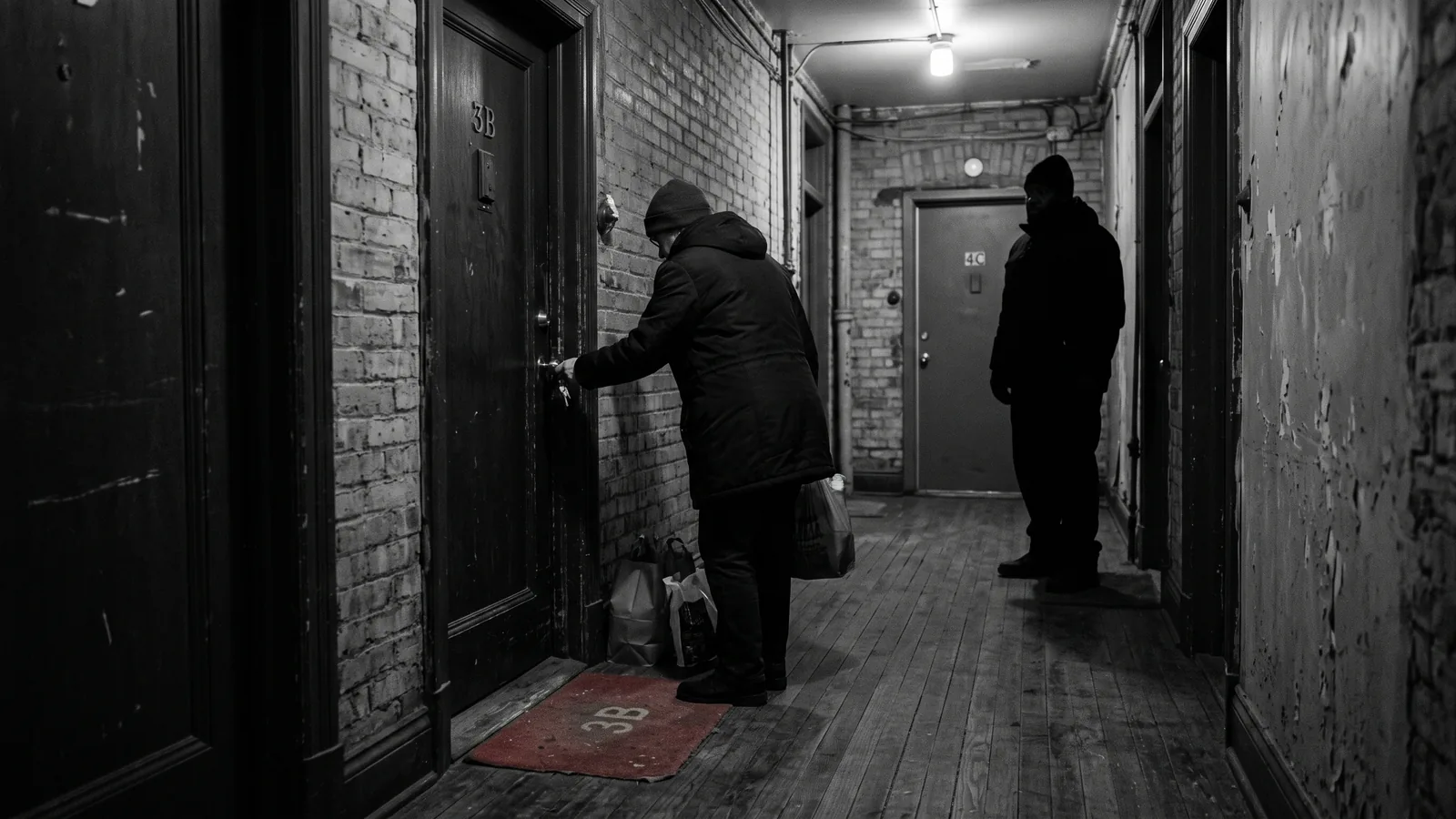
There is a story you hear far too often in Quebec's rental world : a landlord inherits a dwelling frozen far below market, occupied by a long-time tenant who has no desire to leave. Frustrated, they tell themselves that a little “pressure” will settle the matter — some disruptive work, repeated visits, a rising tone, maybe an eviction threat or two. In the moment, it looks like a strategy. In reality, it is the fastest way to turn an ordinary file into a legal and media nightmare. Tenant harassment is not a grey area : it is a red line, and Québec's rental board (the TAL) regularly issues decisions that cost the landlords who cross it dearly. This guide explains why these practices happen, why they end badly, and above all how to get the result you are after — taking back or optimizing a dwelling — legally, through a voluntary agreement.
In this article
- What is tenant harassment ?
- Why these practices happen
- The forms harassment takes
- What the law says : peaceful enjoyment of the premises
- The consequences : why it ends badly
- Why “doing it right” takes professionals
- The legal way to do it : the voluntary agreement
- The red line : the actions you must never take
What is tenant harassment ?
Tenant harassment is not necessarily one big, dramatic gesture. Most often it is an accumulation : a series of repeated behaviours, pressures and manoeuvres by which a landlord tries to make a tenant's life unpleasant enough that they eventually give up their dwelling on their own. The goal, spoken or not, is almost always the same : to empty the dwelling without going through the proper channels, often to re-rent it for more, renovate it or sell it vacant.
What characterizes harassment is not just the nature of the actions, but their repetition and their intent. A one-off disagreement, a repair that runs late once, a legitimate visit announced by the rules : none of that is harassment. But when the actions pile up, when they all converge on the same goal — pushing the tenant out — and interfere with their peace, you cross into a prohibited practice. A single act can be enough if it is serious, such as cutting off the heat in the middle of winter ; but in most cases, it is the recurring pattern that is held against the landlord.
An interference with a fundamental tenant right
To understand why harassment is taken so seriously, you have to grasp what it attacks. In Quebec, a tenant has the right to peaceful enjoyment of the leased premises. This is not a privilege : it is one of the strongest rights in rental law, backed by the right to remain in the dwelling. As long as they meet their obligations — paying rent, not disturbing the peace, taking care of the dwelling — a tenant has the right to stay in their home and live there in peace. Harassment, by definition, aims to sabotage that peace in order to bypass this right. That is precisely what makes it illegal, and what explains the firmness of the TAL.
Harassment, renoviction, bad-faith repossession : the same family
Harassment belongs to a family of practices the law regulates ever more tightly. It includes renoviction — evicting under the pretext of renovations only to never re-rent to the tenant at the same price —, bad-faith repossession — claiming to house a relative while actually re-renting for more — and various forms of intimidation. All share a common denominator : they seek to obtain a departure that the law would not otherwise grant, by circumventing the rules or wearing down the tenant's resistance. And all expose the landlord to the same kinds of penalties.
Key takeaway
Tenant harassment is the use of repeated pressure to push a tenant to leave their dwelling against their will. It interferes with their right to peaceful enjoyment of the premises. It is not a strategy : it is a prohibited practice that almost always backfires on the landlord.
Why these practices happen
To avoid a mistake, you first have to understand what drives it. Harassment almost never arises out of pure malice : it is born of an economic gap and a feeling of powerlessness. A landlord looks at a dwelling whose rent has been frozen, year after year, well below what the market would command. They watch the lost income add up, they know the tenant has the right to stay, and they feel stuck. It is out of this frustration, more than out of ill intent, that most missteps are born.
The rent gap, that silent engine
In Quebec, the right to remain in the dwelling means a long-time tenant often pays a rent far below market. On paper, the building is worth more than it earns : this is dormant value. Many landlords wrongly conclude that the only way to unlock this value is to make the tenant leave — and that if the legal routes are slow or closed, pressure is the answer. It is an understandable line of reasoning, but a dangerous one : it confuses the legitimate goal (recovering the value) with an illegitimate means (harassment).
Not knowing the rules
Many missteps come simply from not knowing the framework. A landlord believes that entering “their own place” is an absolute right, that they can multiply visits, that a “difficult” tenant will eventually give in. They fail to see that each of these actions, added to the others, paints a portrait of harassment in the eyes of the tribunal. Ignorance is not a defence : you can slip into illegality while simply thinking you are “defending your interests.”
Bad advice and impatience
Finally, there is impatience and bad advice. “Make his life hard, he'll leave.” “Cut off the heat, he'll get the message.” These shortcuts circulate among landlords like recipes. They ignore a simple reality : the legal balance of power tips heavily toward the tenant the moment their peace is disturbed. What looks like a shortcut is in fact the longest — and costliest — road.
The forms harassment takes
Harassment is recognized by its patterns, which recur from one case to the next. There is no closed official list, but you can group the most common behaviours. Describing them is not providing an instruction manual : it is showing the boundaries you must never approach.
Psychological pressure and intimidation
- Piling on notices — stacking up eviction, repossession or unreasonable increase notices with no real basis, to exhaust and discourage.
- Intrusive visits — showing up without a valid notice, multiplying inspections, “dropping by” unannounced, turning the dwelling into a place without privacy.
- Relentless calls and messages — a flood of communications that goes beyond the normal bounds of a landlord-tenant relationship.
- Threatening or contemptuous remarks — implying it “would be better” to leave, waving around consequences, playing on fear.
Material interference and deprivation of services
- Cutting off or reducing essential services — heat, hot water, electricity : among the most serious and most heavily penalized actions.
- Letting repairs rot — deliberately neglecting urgent work to make the dwelling uncomfortable and push the tenant to leave.
- “Strategic” disruptive work — orchestrating noisy, dusty or endless projects at the wrong time, with the real aim of driving the tenant away.
- Hindering normal use — blocking an access, removing a service provided in the lease, complicating daily life bit by bit.
Misusing procedures
A subtler category deserves to be named : using the procedures themselves as an instrument of pressure. Sending a repossession of a dwelling that you know is in bad faith, brandishing an eviction for work with no real intention to re-house, demanding a series of unreasonable increases : this is not “using your rights,” it is misusing them. The TAL knows how to tell the difference between a sincere step and a manoeuvre designed to wear down the tenant's resistance.

What the law says : peaceful enjoyment of the premises
The legal framework rests on a few clear principles, set out by the Civil Code of Québec, the housing legislation and the way Québec's rental board (the TAL) applies them. They can be summarized without getting into specific amounts or articles, which change and deserve an up-to-date check.
The right to peaceful enjoyment
The cornerstone is the tenant's right to peaceful enjoyment of the leased premises. The landlord has the obligation not only to deliver a dwelling in good condition, but to not disturb the tenant's peaceful use of it throughout the term of the lease. Harassment is, by its nature, a direct violation of this obligation. It is not a matter of interpretation : when repeated actions interfere with the tenant's peace in order to make them leave, the breach is established.
The right to remain in the dwelling
To this right is added the right to remain in the dwelling : a tenant in good standing has the right to stay in their home and to renew their lease. Harassment aims precisely to circumvent this right by obtaining “voluntarily” what the law would not grant. That is why tribunals look beyond appearances : if a “voluntary” departure was in fact extracted through pressure, it can be re-characterized and give rise to recourse.
The role of Québec's rental board
The TAL — which replaced the former Régie du logement — is the body that decides these disputes. It can be seized by the tenant to have behaviours stopped, to obtain compensation, to have an illegal eviction recognized or to request reinstatement. The legislator has also tightened the rules in recent years to better protect tenants against abusive evictions and manoeuvres aimed at emptying dwellings : the trend is clearly toward greater severity against prohibited practices.
The consequences : why it ends badly
Here is the heart of the matter, the part too many landlords discover too late. Harassment does not end badly by bad luck : it ends badly structurally, because the legal and reputational balance of power works against whoever practises it. The consequences do not just add up : they compound and reinforce each other.
The challenge before the TAL
The first domino is the application to the tribunal. A harassed tenant — or those around them, or a tenants' association — need only document the actions and apply to the TAL. And harassment leaves traces : messages, emails, serial notices, testimony, documented lack of heat, unmade repairs. These elements, easy for the tenant to gather, are damning for the landlord. The burden flips : what was meant to make the tenant leave becomes the evidence against the landlord.
Damages and punitive damages
The tribunal can order the immediate cessation of the behaviours, then order the landlord to compensate the tenant for the harm suffered : stress, loss of enjoyment, disturbance, expenses incurred. And when the interference is judged intentional — which is often the case with harassment, by definition — punitive damages are added, meant to penalize and deter. We do not put forward amounts : they vary from one case to the next. But the total almost always exceeds, and by a wide margin, the hoped-for rent gain.
Fines and penalties
Beyond compensating the tenant, certain abusive practices can expose the landlord to penalties and fines provided for under the housing legislation. The ranges change as the framework tightens ; we remain cautious and cite no specific figure. Just remember the direction : the legislator wanted to make these manoeuvres costly to discourage them, and it is succeeding.
Reinstatement of the tenant
This is perhaps the most dreaded scenario, and the most underestimated. A tenant who left under pressure can have it recognized that they were evicted illegally and, in some cases, obtain their reinstatement in the dwelling. Picture it : the landlord has spent money, worried, perhaps renovated — and the tenant comes back, with damages to pay on top. Everything that had been “gained” is lost, plus the costs. A voluntary agreement, by contrast, closes this door for good : a freely consented and well-documented departure does not reopen.
Reputation and the media
Finally, there is a consequence that cannot be repaired before a tribunal : reputation. Cases of tenant harassment, renovictions and abusive evictions regularly make the headlines in Quebec. A public record, a name associated with this type of practice, media coverage : it follows a landlord for a long time, well beyond the building concerned. In a world where everything is searched online, a single case can weigh on all future business relationships — banks, insurers, future tenants, partners.
Key takeaway
Harassment stacks up the risks : a challenge before the TAL, damages, punitive damages, possible fines, reinstatement of the tenant, and lasting harm to reputation. The hoped-for gain — a few hundred dollars of rent a month — never comes close to matching this total.
Why “doing it right” takes professionals
A good-faith landlord might object : “I don't want to harass anyone. I just want to offer a departure, properly.” That is the right intention — but the line between a healthy negotiation and pressure deemed abusive is much thinner than people think. That is precisely where professional support makes the difference between a solid process and a file that goes off the rails.
Every detail can tip the balance
The difficulty is not in the principle, it is in the execution. Consider everything that can derail a well-intentioned process :
- Tone and frequency — the same offer, repeated too often or worded too firmly, can go from proposal to pressure.
- Respecting notices and deadlines — a poorly drafted notice, sent at the wrong time, and a legitimate step starts to look like a manoeuvre.
- Proof of good faith — without documentation of the free and informed nature of the agreement, a voluntary departure can be challenged after the fact.
- Drafting the agreement — a vague, incomplete or unbalanced agreement can be attacked ; a well-crafted agreement protects both parties and closes the file for good.
- The negotiation itself — offering too little puts the tenant on the defensive ; going about it clumsily turns a conversation into a conflict.
None of these points is insurmountable ; but their accumulation means that an individual, alone and emotionally involved, easily gets it wrong. And a single mistake can be enough to re-characterize the whole process.
The objectivity the landlord does not have
A landlord is, by nature, an interested party and often an exasperated one. That is human — and it is exactly what makes direct negotiation risky. A professional intermediary brings what the landlord cannot : distance, a framework, a documented process, and a relationship that stays respectful even when interests diverge. The tenant, for their part, feels treated fairly rather than hunted — which, paradoxically, increases the chances of an agreement.
“You only have one name in life”
This is perhaps the most important reason. A landlord's reputation is a precious, fragile asset : you build it over years and can destroy it in a single case. You only have one name in life ; it should not be gambled on a shortcut. Entrusting the process to professionals who work within the rules protects both your wallet and your name. It means refusing to risk what has the most value to save a few weeks.
The legal way to do it : the voluntary agreement
Here is the good news : the result that harassment tries to extract — a vacated dwelling or an adjusted rent — can be obtained legally, cleanly and without risk. Not by pushing the tenant out, but by reaching an agreement with them. That is the principle of the voluntary agreement, and it is exactly what Opti Loyer does.
Cash for keys : paying for a consented departure
Cash for keys is a mutually agreed lease cancellation. Rather than wearing down the tenant's resistance, you offer them an agreement : they agree to end the lease and leave on an agreed date, in exchange for compensation. The tenant is never forced ; they agree because it is in their interest — an amount that helps them find a new home, a reasonable timeframe, a dignified transition. Because both parties sign a clear agreement, there is no reason to justify, no possible challenge, no burden of proof and no risk of reinstatement. Everyone knows where they stand, and the file closes for good.
For a dwelling stuck far below market, it is often the most profitable and the safest decision a landlord can make. Taking back the dwelling cleanly, bringing it up to standard and re-renting it at its fair value creates value that frequently runs into tens of thousands of dollars on the asset — without an ounce of legal risk. We explain the whole reasoning on our rent optimization page, and our cash for keys kit brings together the concrete pointers to get started well.
Cash for raise : reaching an agreement without a departure
A departure is not always necessary or desirable. Cash for raise is the other route : rather than making the tenant leave, you agree with them on a rent increase accepted on both sides, often in exchange for improvements or a concrete benefit. The tenant stays in their home, satisfied ; the landlord adjusts their return legally. Here again, everything rests on free consent : no pressure, an assumed win-win.
Paid only for results, zero risk for the landlord
Opti Loyer's model is designed to flip the risk calculation. The initial audit is free : we look together at the dormant value your building holds, with no commitment. And our work is paid only for results — you pay only if the agreement is reached and you get the outcome. The financial risk therefore does not rest on you. We handle everything, legally : approaching the tenant, the negotiation, documenting consent, drafting the agreement. You get the result without ever approaching the red line, and without gambling your name.
The red line : the actions you must never take
To close, a clear reminder of the behaviours that tip a process into illegality. Recognizing them already means staying well clear of them.
1. Cutting off or reducing essential services
Heat, hot water, electricity : tampering with them to force a departure is among the most serious actions. It puts the tenant's safety at stake and triggers the heaviest penalties. No rent saving is worth this risk.
2. Multiplying visits, calls and notices
Turning the relationship into constant surveillance — visits without notice, relentless calls, serial notices — paints a portrait of harassment even if each action, taken alone, seems harmless. It is the accumulation that is held against you.
3. Misusing a repossession or an eviction
Invoking a repossession of a dwelling that you know is in bad faith, or an eviction for work with no real intention to re-house, is not “using your rights” : it is misusing them. The TAL tells the difference, and the tenant can act even after leaving.
4. Deliberately letting repairs rot
Neglecting urgent work to make the dwelling unlivable is an interference with peaceful enjoyment. “Strategic” discomfort is a form of harassment, not excusable negligence.
5. Intimidating, threatening, instilling fear
Any communication that plays on fear — insinuations, veiled threats, contempt — crosses the line. A legitimate negotiation rests on an offer and an agreement, never on fear.
The rule, in the end, is simple. If a process rests on the tenant's discomfort or fear, it is on the wrong side of the line. If it rests on their free consent in exchange for a real benefit, it is on the right side. Between the two, there is no comfortable grey area : there is a risk, and it is yours. The right instinct : never improvise pressure, always favour the agreement — and, when in doubt, get support.
This content is provided for informational purposes and does not constitute legal advice. The rules and penalties governing harassment, repossession and eviction change — verify the terms in force or consult a legal advisor before acting.