Rental income optimization · Montreal's North Shore
From Terrebonne to Saint-Jérôme, by way of Repentigny, Mascouche and Blainville, thousands of units are rented well below market. Opti Loyer recovers that gap — through audit, cash for raise and cash for keys — to grow your income and your buildings' value at refinancing. And you only pay if it works.
How much are you losing?
* Indicative estimate — annual rent gap capitalized at a 5% cap rate (× 20).
The reality on the ground
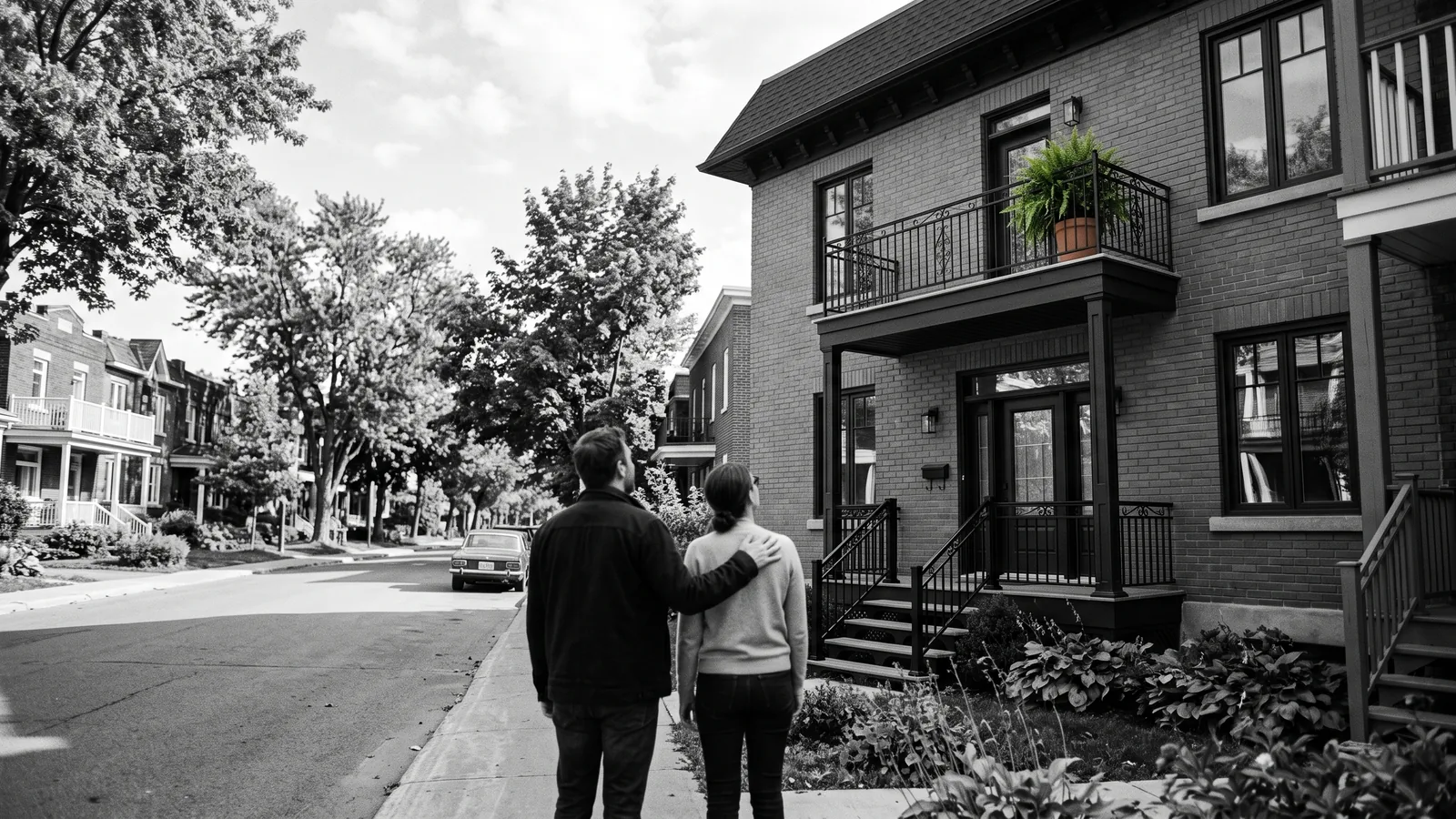
Montreal's North Shore is no longer the quiet suburb it was twenty years ago. Terrebonne, Repentigny, Mascouche, Blainville, Sainte-Thérèse, Saint-Jérôme: these cities have seen waves of young families, of workers who left the island for more space, and of households looking for an affordable plex with a yard. Rental demand has climbed, new construction rents at top dollar — and yet, a large part of the existing stock has stayed frozen in time.
The reason is almost always the same. On the North Shore, a good portion of the duplexes, triplexes and small income properties belong to owner-occupants — the owner lives in one unit and rents out the others — or to small investors who own one or two buildings. These are people who know their tenants, who value stability, and who, year after year, simply never adjusted the rents. A good tenant who's paid on time for eight years? You don't touch it. It's human, it's understandable — but it creates a gap that quietly widens.
The result: in the same block, a new unit rents at market price while the neighbour next door, on a long-standing lease, still pays the rate from several years ago. It's not unusual to see a family 4½ in Terrebonne or Repentigny rented hundreds of dollars below what a tenant would pay today for the unit across the street. Multiplied across a building's units, the gap becomes enormous — and it brings in nothing as long as it lies dormant.
That's exactly where the value is hiding. North Shore units are often bigger, newer and better maintained than the stock in central Montreal; the parking spots, the yards and the family spaces have real rental value. The catch-up potential is very real — you just need to quantify it unit by unit, then go after it cleanly, without conflict and in compliance with the TAL.
The multiplier effect
An income property is valued from its net income, capitalized at the capitalization rate (cap rate). At a 5 % cap rate, every extra $1 of annual net income adds roughly $20 of value.
Run the full calculation with the numbers from your North Shore building in our value-created calculator — you'll see, live, the equity and the refinanceable amount your optimization can generate. Illustrations at a 5 % cap rate (× 20); actual results depend on the area, the building and the financing.
Our levers on the North Shore
Rent optimization isn't a one-size-fits-all recipe. Depending on the market gap, the tenant and your objective, we choose — and combine — the most profitable levers for your building.
We negotiate a mutually agreed rent increase in exchange for compensation. Ideal for the good long-standing tenants you want to keep in Blainville or Repentigny. See the service →
A voluntary move-out agreement, paid and signed, to take back a heavily under-rented unit in Mascouche or Terrebonne and re-rent it at market. See the service →
Non-payment, conflicts, difficult files: we take the file in hand and manage the process, within the legal framework, through to resolution. Learn more →
The starting point, free: an analysis of your below-market North Shore rents, with a catch-up plan quantified in value, unit by unit. Request the audit →
Cities served
Lanaudière, the Laurentians and the north ring of Greater Montreal: if your building is in the area, we can analyze its rents.
Concrete cases
Representative examples for illustration only — the actual amounts depend on your building, your area and the agreement reached.
The process
We compare your rents to the local market — Terrebonne, Repentigny, Mascouche or elsewhere — unit by unit, and we quantify the dormant value, with no commitment.
We choose the most profitable lever for each unit — cash for raise, cash for keys or management — and we present you with a clear plan with figures and a realistic timeline.
We lead the approach and the negotiation on your behalf, with tact, and we put together the voluntary agreement, documented and signed — without conflict before the TAL, and nothing without your consent.
The new income translates into value: more cash every month, and equity to refinance and reinvest on the North Shore. And you only pay us on the result achieved.
FAQ
Yes. We work throughout Montreal's North Shore — Terrebonne, Repentigny, Mascouche, Blainville, Saint-Jérôme, Bois-des-Filion, Sainte-Thérèse, Lorraine, Rosemère and the surrounding municipalities of Lanaudière and the Laurentians. Tell us your area and we'll confirm quickly.
A large share of the North Shore plex stock is owned by owner-occupants or small investors who keep their tenants for a long time and don't adjust rents year after year. Meanwhile, rental demand has climbed with the arrival of new households. The result: long-standing leases left well below what a comparable unit is worth today in the same neighbourhood.
Nothing. The initial audit is free and with no commitment, whether your building is in Terrebonne, Repentigny, Mascouche or anywhere else on the North Shore. After that, you only pay if we get results: our fee is tied to the value and income we help you gain.
Yes. Cash for keys is a voluntary move-out agreement: the tenant agrees to leave in exchange for compensation, freely and in writing. All of our work on the North Shore is done through signed and documented agreements, in compliance with Québec's rental board (the TAL). Nothing is signed without the tenant's consent, and nothing is done without yours.
No, quite the opposite. The longer a rent has stayed below market, the larger the gap to recover — so the higher the optimization potential. A long-standing lease in Mascouche or Blainville is often the best candidate for a cash for raise or a cash for keys.
Yes. On an income property, every dollar of recovered rent capitalizes into value: at a 5% cap rate, a catch-up of $100/month adds roughly $24,000 to the building's value. Even on a Saint-Jérôme or Sainte-Thérèse duplex with a single below-market unit, the catch-up is often worth far more than you'd think.
No. We lead the approach and the negotiation on your behalf, with tact and respect. On the North Shore as elsewhere, you never have to handle the difficult conversation — we take care of it, and nothing is signed without your consent.
The North Shore stock is newer, more family-oriented and more often held by owner-occupants or small portfolios. The units are bigger, rental demand is rising with suburban growth, but rents have frequently stayed stuck to old leases. That creates a very real market gap, unit by unit, which we quantify during the audit.
Cash for raise keeps the tenant in place with a rent readjusted to market, mutually agreed in exchange for compensation; cash for keys frees up the unit in exchange for compensation, allowing you to re-rent at market price. On the North Shore, where units are large and often occupied for a long time, we choose the lever based on your objective and the rent gap, building by building.
Often, yes. Rental demand has risen with the growth of the North Shore suburbs, but many leases in Terrebonne, Blainville or Repentigny have stayed stuck at old amounts. The free audit compares each of your units to equivalent units in the same area to quantify the real gap — without ever assuming it in advance.
This page is provided for informational purposes and does not constitute legal or financial advice. Rates, values and TAL rules change — consult a professional for your situation.
A free audit, with no commitment — and you only pay if we get results. From Terrebonne to Saint-Jérôme, let's see together how much your rent optimization can create.
Get my free analysis →