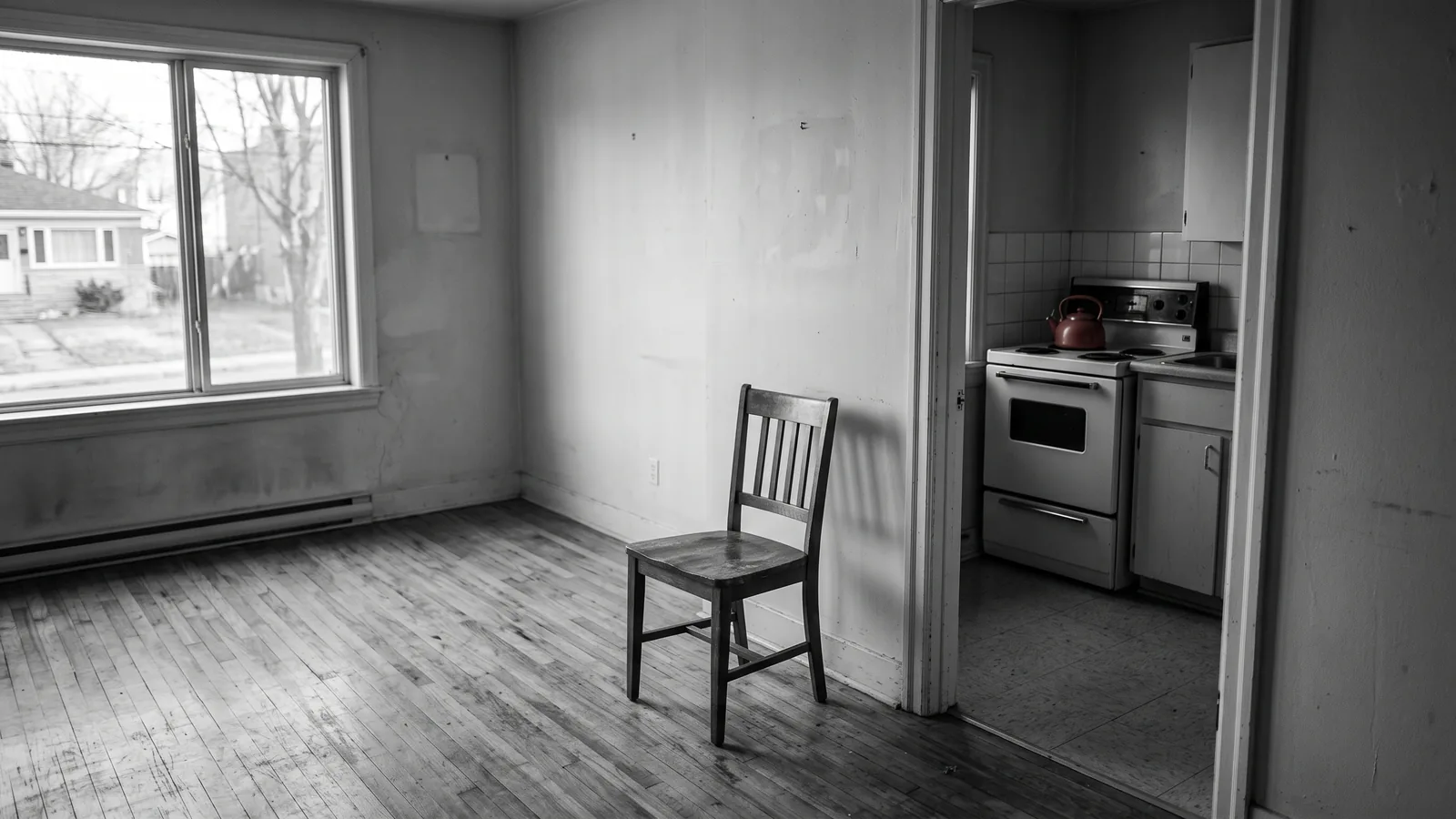
When a penalty becomes a mere cost of doing business, it stops protecting anyone. That, in a sentence, is the unease running through the long-form feature published by Radio-Canada in May 2024 on the risk, for many Quebecers, of losing their home. The report follows, among others, the experience of the Jalbert family and sets these stories against the backdrop of Bill 31. One number made more than one observer wince : a $50,000 penalty for a bad-faith eviction, presented as weakly deterrent compared with what a landlord stands to gain by emptying a below-market dwelling and re-renting it for far more. This article is not an indictment : it is a cold analysis, written for landlords. Because if the penalty doesn't scare the cheaters, it should scare everyone else — those who have a name to protect and who don't realize there is a perfectly legal way to reach the same result.
In this article
The facts : what made the headlines
The starting point is an in-depth report, not a news brief. In its long-form feature, Radio-Canada documents a reality that has become commonplace : for a large number of Quebec tenants, losing one's home is no longer a distant scenario but a concrete risk. The outlet illustrates this climate through personal stories — including, according to the report, that of the Jalbert family — and through the effect of recent legislative changes, particularly Bill 31, passed in 2023.
As the story unfolds, the number that concerns us here appears : a $50,000 penalty handed down following an eviction found to be in bad faith. Far from being presented as a resounding victory for tenants, this amount is described as insufficient to discourage the behaviour. The logic reported is simple and relentless : if reclaiming a dwelling to re-rent it for far more brings in, year after year, more than the risk of a one-time fine, then the penalty changes nothing in the offender's economic equation. It becomes a predictable expense, almost budgeted for.
Let us set out our framework right away, because it is decisive for what follows. We rely here on what the report presents and on the general principles of Quebec rental law. We are not re-trying any case, we add no detail the report does not provide, and where matters are reported rather than definitively decided, we use cautious language — « according to the report », « allegedly ». The goal is not to point at a culprit, but to understand why this kind of shortcut is a bad calculation, including for the person who thinks they'll get away with it.
Why it was illegal : bad faith in law
To grasp the seriousness of a bad-faith eviction, you first have to understand what it attacks. In Quebec, a tenant does not hold a mere right of temporary occupancy : they enjoy a right to remain in the dwelling, one of the pillars of rental law, enshrined in general terms by article 1936 of the Civil Code of Quebec (the C.c.Q., Quebec's foundational private-law statute). As long as they meet their obligations, they may stay in their home and have their lease renewed. A landlord therefore cannot « reclaim » a dwelling simply because the rent seems too low to them.
The rare exits — repossession to house oneself or a relative, eviction for major renovations, a subdivision or a change of use — open only under strict conditions, and above all, they all rest on one fundamental requirement : good faith. This is where everything is decided.
Bad faith : the gap between the stated reason and the real intention
A bad-faith eviction is precisely the use of a legal reason as a façade. One invokes a repossession for a relative who will never move in ; one announces major renovations whose real purpose is to empty the premises ; one pretends personal occupancy only to put the dwelling right back on the market at a higher rent. In all these cases, the stated reason is not the real reason. It is this gap — between what one declares and what one actually wants — that defines bad faith, and it is what the Tribunal administratif du logement (the TAL, Quebec's rental housing tribunal) seeks to uncover. We detail this mechanism in our guide on bad-faith repossession of a dwelling.
The law does not stop there. When, to push a tenant toward the exit, a landlord piles up hostile acts — pressure, veiled threats, deliberate degradation of conditions, cutting off services — they enter the territory of harassment, prohibited in general terms by article 1902 of the Civil Code. The law is explicit here : one may not harass a tenant in a way that restricts their peaceful enjoyment of the premises or induces them to leave. A « renoviction » carried out with noisy work and intimidation thus often combines two faults : the false pretext and the harassment.
Renoviction, fictitious repossession : two faces of the same problem
The vocabulary varies, the logic is identical. Illegal renoviction — evicting under the pretext of renovations in order to re-rent for more — and fictitious repossession are only two variations of one and the same fault : instrumentalizing a regulated right to achieve an objective that right does not permit. In the first case, a commercial operation is disguised as necessary work ; in the second, a return to market value is disguised as a family's housing need. The result, in the tribunal's eyes, is the same : an infringement of the right to remain in the dwelling based on a lie.

The consequences : damages, punitive damages and reputation
When a bad-faith eviction is established, the bill is not limited to a symbolic reimbursement. The Civil Code arms the tenant with real recourse, and the tribunal can strike on several levels.
Damages : repairing the harm
First, compensation for the concrete harm. In general terms, article 1968 of the Civil Code allows a tenant evicted or repossessed in bad faith to claim damages for the wrongs suffered : moving costs, the rent gap to rehouse at going rates, disruptions, various losses. In other words, the landlord must make up the gap between the tenant's situation and the one they would have been in without the abusive eviction. On this heading alone, the total can already climb.
Punitive damages : sanctioning intent
Next — and this is what changes the nature of the risk — bad faith opens the door to punitive damages. Their purpose is not to repair, but to punish and deter. They are added to the damages and target precisely the intentional character of the fault. It is notably the accumulation of these items that can lead to penalties on the order of several tens of thousands of dollars — like the $50,000 figure noted in the report. The fact that a tenant can act even after leaving the dwelling extends the landlord's window of liability accordingly : moving out does not close the file. We return to the scale of these penalties in our article dedicated to the renoviction fine in Quebec.
Reputation : the cost no judgment puts a number on
And then there is what the tribunal does not calculate. An abusive eviction that ends up in a national report means a name associated, publicly and lastingly, with the face of a tenant pushed out. In the age of online searches and permanent archives, that label sticks. It complicates future relationships with tenants, with business partners, sometimes with financial institutions. The amount of a penalty eventually gets paid ; reputational harm, on the other hand, cannot be erased with a cheque. It is often the heaviest consequence — and the most underestimated.
Key takeaway
A bad-faith eviction exposes you to three layers of cost : the damages that repair the harm, the punitive damages that sanction the intent, and a reputational harm that no judgment puts a number on. The tenant can act even after leaving. The « shortcut » is therefore a bet that is both financial and personal.
The « weakly deterrent » calculation : the real trap
There remains the uncomfortable question posed by the report : if $50,000 isn't enough to discourage, does cheating « pay » ? That is the reasoning some landlords tell themselves, under their breath. Let's take it apart, because it is more fragile than it looks.
The cheater's calculation rests on one assumption : that the worst case is a known, predictable fine, absorbable as a cost of doing business. But that is not how the risk actually presents itself. First, the penalty is never guaranteed to be « only » $50,000 : each case is assessed on its facts, and the sum of damages, punitive damages and fees can vary widely. Next, you have to add the cost of the litigation itself : time, fees, uncertainty, energy tied up for months. Finally — and this is decisive — the calculation completely ignores the reputational variable, which has no ceiling and no expiry date.
Above all, this reasoning misses one obvious point : you can reach exactly the same financial objective without taking any of these risks. The landlord who wants to reclaim a below-market dwelling does not have to choose between « putting up with frozen rent » and « cheating and hoping not to get caught ». That false alternative is precisely the trap. There is a third way, legal, transparent, and often faster : the voluntary agreement.
- The observation : « My tenant pays a rent far below market, I'm losing money every month. »
- The shortcut : « I'll invoke a repossession (or renovations) to make them leave, then re-rent at top price. »
- The wall : a challenge at the TAL, damages, punitive damages, fees, and a name in the media. The hoped-for gain goes up in smoke — and the rest with it.
What should have been done : the voluntary path
Here is the practical heart of this article. Faced with a dwelling stuck below market, the honest landlord has a tool cut out exactly for this need : the voluntary end-of-lease agreement, what is commonly called cash for keys. The principle is as simple as it is effective : rather than inventing a reason, you propose that the tenant agree together to end the lease on a chosen date, in exchange for compensation.
Why it's legal — and why bad faith becomes impossible
The difference from an abusive eviction is not cosmetic : it is structural. In a bad-faith eviction, the tenant is deceived or coerced. In a voluntary agreement, they consent freely, with full knowledge, because they find it in their interest. There is no longer a gap between a stated reason and a hidden intention : there is no imposed reason at all, only an agreement between two consenting adults. Now, bad faith presupposes, by definition, a lie or coercion. When the tenant says yes of their own free will and signs, there is nothing to disguise, therefore nothing to contest, and no punitive damages to fear.
That is the beauty of the approach : it does not circumvent the law, it complies with it perfectly, because it rests on the one mechanism the law can only respect — the shared will of the parties. Nothing prevents a landlord and a tenant from agreeing to terminate their lease. Cash for raise, its variant, applies the same logic not to the tenant's departure but to a negotiated adjustment of the rent : again an agreement, again consent.
The same result, without the risk
The point too many landlords miss : the voluntary agreement leads to the same financial objective as the illegal shortcut — reclaiming the dwelling, returning it to its fair value, capturing the dormant value of the asset — but without the litigation, without the damages, without the headlines. Where the fake repossession puts $50,000 in penalties plus reputation on the line, the voluntary agreement replaces that risk with a known and controlled expense : the compensation offered to the tenant, negotiated according to the value actually created. You trade a dangerous bet for a predictable and profitable cost.
For a dwelling whose rent is far below market, this created value frequently runs into tens of thousands of dollars on the asset — often far more than the compensation needed to convince a tenant to leave willingly. That is what our value calculator measures, and it is the foundation of all our rent optimization work. The illegal shortcut, by contrast, puts that same value at risk instead of securing it.
Why go through pros
One legitimate objection remains : negotiating an agreement already means venturing onto terrain where a misstep — an awkward phrase, one pressure too many, a poorly calibrated offer — can tip from « voluntary » into « harassment ». That's true. And it is exactly why this work should not be improvised alone.
The common thread in almost every abusive-eviction case, the ones the report documents as well as the others, comes down to one image : a landlord who wanted to move fast, alone, without gauging the boundary. A professional's value is not only knowing the law : it is knowing precisely where the line runs between a legitimate offer and illegal pressure, and staying on the right side at every step. A seasoned intermediary leads the conversation without ever threatening, documents the consent, structures a balanced written agreement, and turns a delicate negotiation into a clean file.
Opti Loyer's approach : paid only for results, the risk on our side
This is precisely our line of work. At Opti Loyer, we reclaim and optimize dwellings through voluntary agreements, in compliance with the Tribunal administratif du logement. The initial audit is free : together we look at the dormant value of your building, with no commitment. And the model is pay only for results — you pay only if the agreement closes and the result is there. No fee if there is no result. The financial risk of the process therefore does not rest on your shoulders : it rests on ours.
It is the exact opposite of the solitary shortcut that leads to penalties. Where the fake repossession puts tens of thousands of dollars and your name on an uncertain bet, the voluntary agreement handled by pros gives you the same result without the bet. You can debate at length whether $50,000 is « deterrent » or not ; the real lesson of the report is elsewhere. It is that a shortcut costs, in money as in reputation, infinitely more than it brings in — and that there is no reason to take it when the legal path exists and leads to the same goal. You only have one name in life : it is not to be gambled at the table of a shortcut.
This content is provided for informational purposes and does not constitute legal advice. The reported facts come from the cited report ; the legal principles are presented in general terms. Every situation is unique — verify the rules currently in force with the Tribunal administratif du logement or consult a legal advisor before acting.