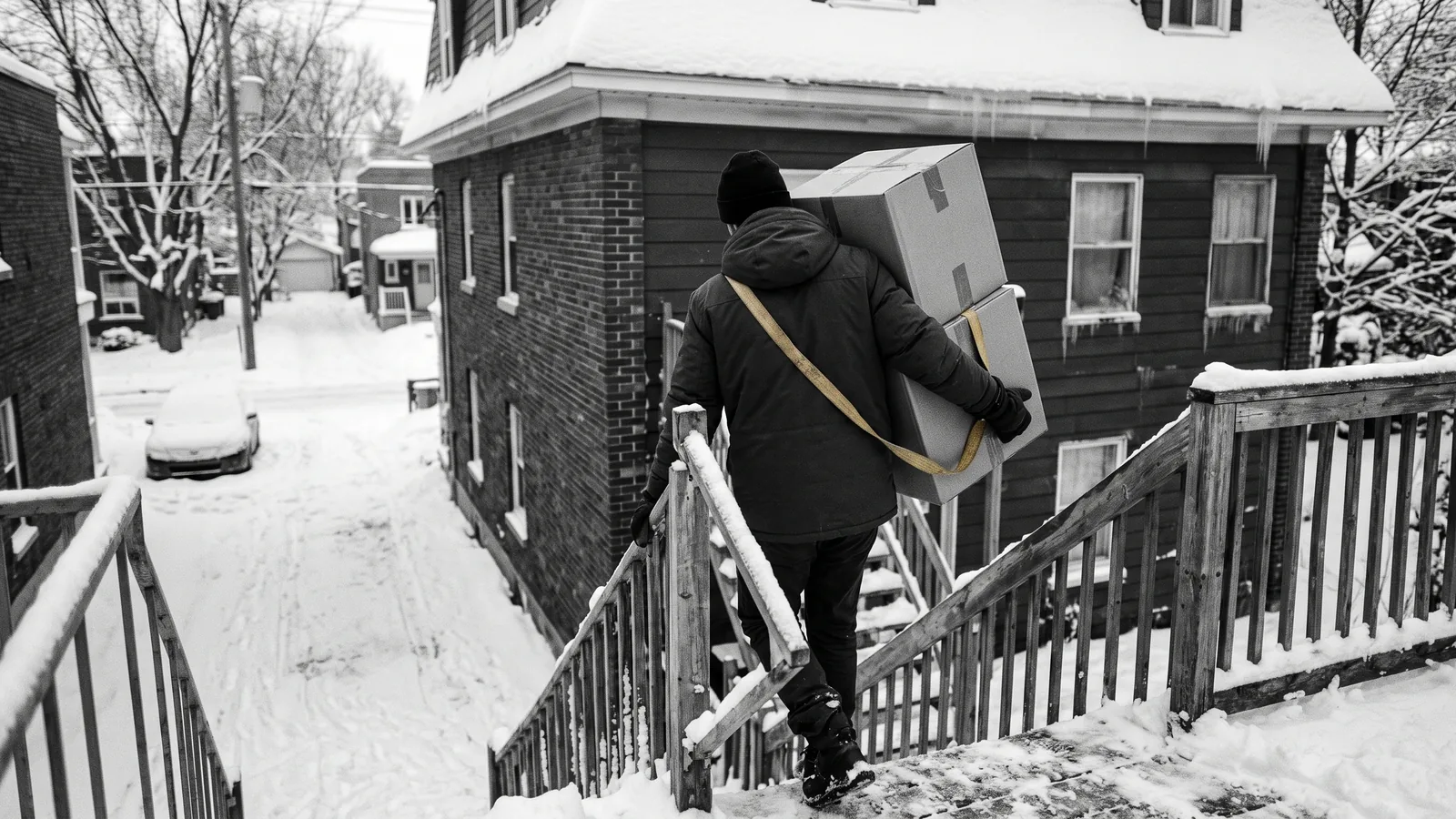
The number made headlines : 132 %. According to a report by the Regroupement des comités logement et associations de locataires du Québec (RCLALQ, a Quebec-wide coalition of tenants' housing committees and associations), covered by CBC, eviction attempts more than doubled in one year, with 3 530 complaints recorded. And contrary to a common assumption, the phenomenon is no longer confined to gentrifying Montreal neighbourhoods : the report describes a surge in the regions and suburbs, with notably 160 complaints in Saint-Jérôme and 190 in Lanaudière. For a landlord, this report is not just one more statistic : it is the signal that the slightest repossession or eviction will now be examined under a microscope — by tenants, by associations, by the media and by the Administrative Housing Tribunal (TAL, Quebec's rental-housing tribunal). Let's look at what these numbers reveal, why so many of these actions cross the line into illegality, what they really cost, and above all how to recover a dwelling without ever exposing yourself.
In this article
The facts : what the RCLALQ report says
The RCLALQ is an organization that brings together housing committees and tenants' associations all across Quebec. When such an organization publishes a report on evictions, it draws on what happens on the ground : the requests for help, the reports and the cases its members see day in, day out. According to CBC's coverage, this report documents a 132 % rise in eviction attempts over one year, with a total of 3 530 complaints.
One point deserves to be made clear from the outset, out of honesty : these are attempts and complaints, not convictions. Not all of these actions are necessarily illegal, and not all have been settled by a court. But the very fact that the number more than doubled in twelve months says something important about the pressure now bearing down on Quebec's rental stock. When an indicator jumps at this rate, it is no longer background noise : it is a deep-seated trend.
A phenomenon spreading beyond Montreal
The most striking element of the report, according to the coverage, is not only the scale of the jump, but its geography. For a long time, abusive evictions were associated with central Montreal neighbourhoods, where property values climb the fastest. The report upends that picture : it documents a surge outside the metropolis, with notable concentrations such as 160 complaints in Saint-Jérôme and 190 in Lanaudière.
This shift toward the regions and outlying areas is no accident. Where rents have stayed low for years, the gap with the market rent has widened, and it is precisely this gap that becomes a temptation. A dwelling rented well below its value represents, in the eyes of some landlords, lost income to recoup — and the fastest way to recoup it, they believe, is to make the sitting tenant leave. That is where most of the slip-ups begin. We have in fact devoted a full analysis to the link between a below-market rent and the value of the building : the lost income is real, but how you recover it makes all the difference between a profitable operation and a conviction.
Key takeaway
The RCLALQ report puts the rise in eviction attempts at 132 % in one year (3 530 complaints), with a surge outside Montreal — notably in Saint-Jérôme and Lanaudière. The common driver : the growing gap between in-place rents and the market.
Why this report changes the game for landlords
One might think a report by tenants' associations concerns only tenants. That would be a misreading. For a landlord, this document has three concrete consequences. First, it fuels media coverage : every spectacular rise becomes a news subject, and behind the statistics, reporters look for concrete cases — and therefore names. Second, it feeds tenant vigilance : better informed, better supported by active housing committees, tenants know their rights better and better and hesitate less and less to contest. Finally, it weighs on the political and judicial climate : when a phenomenon is documented on this scale, the rules tighten and the courts sharpen their scrutiny. In short, the context has never been less forgiving of improvisation.
Why so many of these evictions cross the line
To understand why a share of these 3 530 actions tips into abuse, we have to return to the principle that underpins all of Quebec's rental law : the right to remain in the dwelling.
The starting point : a tenant in good standing has the right to stay
In Quebec, a tenant who abides by their lease — who pays their rent and meets their obligations — enjoys the right to remain in the dwelling, recognized in article 1936 of the Civil Code of Québec (C.c.Q., the Quebec Civil Code). Plainly put : they can stay in their home as long as they honour their commitments, and their lease renews automatically. This is not a favour, it is a fundamental right of the rental regime. It can be set aside only through specific, tightly framed exceptions.
These exceptions can be counted on one hand : the good-faith repossession of a dwelling (to house the landlord or an eligible relative), eviction for a project affecting the dwelling itself (subdivision, enlargement, change of use), or termination for the tenant's serious fault. Outside these cases, a tenant in good standing cannot be forced to leave. It is this reality that many hurried landlords refuse to accept — and it is from that refusal that abuses are born.
Bad faith : the flaw that contaminates everything
Most abusive evictions share the same manufacturing defect : they rest on a ground that is not the real ground. The landlord invokes a repossession for a relative, but no one will ever move in. They use major renovations as a pretext, but the true goal is to empty the dwelling and re-rent it for more. This is what is called bad faith, and it is the flaw that makes an action illegal — even when the form, on the surface, is respected.
Bad-faith repossession and illegal renoviction are the two most frequent faces of this problem. In both cases, the law places the burden on the landlord : as soon as a serious doubt exists, it is up to them to demonstrate that their project is real and sincere. A vague project, one that changes its story, or one that ends in re-renting at a markedly higher rent, turns against the person who invoked it.
Harassment : article 1902 of the Civil Code
Beyond the false ground, a good portion of the "eviction attempts" that the report documents take a more insidious form : pressure. Repeated calls, intrusive visits, barely veiled threats, offers laced with innuendo, deliberate neglect of maintenance — all acts meant to discourage the tenant and push them "of their own accord" toward the door.
The law has a name for this. Article 1902 of the Civil Code of Québec expressly prohibits a landlord from harassing a tenant in a manner that pushes them to leave their dwelling or to give up their rights. Harassment of a tenant is a standalone fault : it can give rise to damages, including punitive ones, quite independently of the question of whether the eviction was otherwise justified. In other words, the manner matters as much as the substance : you can have a valid ground and still be found liable for the way you carried out the process.
A note of caution on the numbers
Let's repeat it, because rigour demands it : the report speaks of attempts and complaints, not judgments. One must not conclude that each of these 3 530 actions is illegal ; some are no doubt perfectly compliant. But the RCLALQ, according to the coverage, sees in it precisely the scale of a pattern of abuse, and the courts' experience confirms that a significant share of these actions would not withstand a serious examination of good faith. For a landlord, the question is therefore not "am I part of the bad half?" ; it is "how do I make sure I am, beyond any doubt, on the right side?".

The consequences : damages, punitive damages and reputation
An abusive eviction does not end with a simple warning. When a tenant contests and the TAL concludes there was bad faith or harassment, the bill can be steep — and it is paid on several fronts at once.
Compensatory damages
The first item is compensatory damages : they repair the real harm suffered by the tenant. Moving costs, the difference between the old rent and the new one (often much higher), trouble and inconvenience, expenses incurred to rehouse in a hurry : all of this can be claimed. The aim is to put the tenant back in the situation they would have been in without the wrongful eviction. In a tight market, where rehousing is expensive, these amounts are not symbolic.
Punitive damages
On top of that comes a second, separate layer : punitive damages. These repair nothing ; they penalize wrongful conduct and seek to deter it. They apply when the infringement of the tenant's rights is intentional or particularly cavalier — which is often the case with a false repossession or open harassment. Recent case-law trends in fact point toward a marked rise in these amounts, precisely because the courts consider that sums that are too low have no deterrent effect. A landlord who thought they were "saving" by evicting can thus end up paying to repair the harm and a penalty on top.
Reputation : the invisible cost that lasts
Finally, there is a cost that judgments do not quantify, but that can exceed all the others : reputation. This is precisely what a report like the RCLALQ's changes. Abusive evictions are no longer private matters settled in silence : they become the subject of news reports, in-depth features, lists. A landlord named in such a context sees their name associated, lastingly and publicly, with a denounced practice. And that name, you only have it once. An investor who builds a portfolio over years can see their credibility eroded by a single mishandled case — with future tenants, partners, lenders, the local community. The lost income from a low rent can be made up ; a damaged reputation, far less so.
Key takeaway
An abusive eviction is paid on three fronts : compensatory damages (the real harm), punitive damages (the penalty, on the rise), and reputation (the cost that lasts). Against lost income of a few thousand dollars a year, the illegal shortcut is almost always the worst possible calculation.
What should have been done : the legal path
The good news is that there is a path that lets you recover a dwelling — even one rented well below market — without any of the risks above. It has a name : the voluntary agreement, better known as cash for keys.
The principle : a mutually agreed termination of the lease
Cash for keys is nothing mysterious, and above all nothing illegal : it is simply a lease termination negotiated between two consenting adults. The landlord proposes that the tenant end the lease and leave on an agreed date ; in exchange, they pay compensation. The tenant is free to accept or refuse. If they accept, both parties sign a clear agreement, and the matter is settled : the dwelling is recovered cleanly, with no false ground, no pressure and no possible contestation.
Why does this path entirely escape the reproaches that weigh on abusive evictions ? Because consent changes its nature. Where repossession and renoviction impose a ground the landlord must prove, the voluntary agreement rests on no imposed ground : it is a mutual agreement, and no one has to demonstrate their good faith since no one is forced. The tenant has not been evicted ; they chose to leave on terms that suit them. There is therefore no possible bad faith, no burden of proof, and no risk of punitive damages.
And if a relative is genuinely going to live in the dwelling ?
Let's be thorough : repossession of a dwelling remains a perfectly legitimate path when the need is real. If you, your spouse, your child or your parent are genuinely going to move in, repossession is made for that. But it then imposes its conditions : a compliant notice, delivered within the deadlines set by the TAL, a clearly identified eligible beneficiary, and a good faith you must be ready to demonstrate. The tenant keeps the right to refuse, and their silence most often counts as a refusal. It is a demanding path, but a solid one — provided the intention to occupy is genuine.
The dividing line is therefore crystal clear. A single question settles everything : is an eligible person genuinely going to live in this dwelling ? If yes, repossession. If no — if your real goal is to recover the dwelling to re-rent it, renovate it or optimize it —, repossession is not the right tool, and the voluntary agreement is.
What to avoid, even within an agreement
The voluntary agreement is safe — on one condition : that the offer remains an offer. The moment an amicable proposal goes off the rails is when it comes with pressure : "accept, or I'll find a way to make you leave." That sentence, or anything resembling it, tips the process over to the side of harassment. A valid agreement assumes a tenant free to refuse without consequence. That is also why the way the offer is presented, documented and formalized matters as much as the amount itself — and that is precisely where professional support makes the difference.
Why work with professionals
Let's pick up the thread of the 3 530 complaints. Behind the statistic are landlords who, for the most part, had no intention of committing an abuse. They had a legitimate need — to recover a dwelling frozen below market — and they wanted to settle it fast, alone, without gauging where the line lay. That is where, almost always, the case tips over : not into calculated malice, but into an improvisation that crosses a border invisible to the uninitiated.
What a professional concretely changes
Getting support for your process is not a comfort expense : it is insurance. A rental optimization professional structures the operation as what it must be — a genuine voluntary agreement — and manages the precise points that, poorly executed, cost tens of thousands of dollars :
- The legal framing : making sure you are indeed in a mutual agreement, and not a disguised repossession or eviction.
- Documented consent : a clear written agreement, freely signed, that protects both parties and shuts the door to any later contestation.
- Conducting the negotiation : presenting the offer without ever slipping into the pressure or innuendo that would get it reclassified as harassment.
- The right amount : offering enough for the agreement to close, without overpaying, based on the value genuinely created on the building.
- Protecting your name : carrying out the operation in a discreet, clean and defensible way, safe from media files.
This is exactly the logic we develop in our article "Why work with a pro to recover a dwelling" : in a context where abuses are scrutinized like never before, expertise is no longer a luxury, it is the surest way to stay on the right side of the line.
The Opti Loyer model : pay only for results, risk on our side
At Opti Loyer, our business consists precisely of helping landlords recover and optimize their dwellings through voluntary agreements, in full compliance with the TAL. The initial audit is free : together we look at the dormant value of your building, with no commitment. And the model is pay only for results : you pay only if the agreement is reached and you get the result. The financial risk therefore does not rest on you — it rests on us. That is our way of saying we believe in the legal path enough to stake our own compensation on it.
The RCLALQ report, at bottom, sends a single message to landlords : the shortcut does not exist. An abusive eviction does not save time or money ; it loses them, often a great deal, and it puts at stake something that cannot be bought back. You only have one name in life. The right way to recover a dwelling stuck below market exists, it is legal, it is proven, and the risk does not have to be yours.
This content is provided for informational purposes and does not constitute legal advice. The data cited comes from CBC's coverage of the RCLALQ report ; the TAL's rules and deadlines evolve — verify the terms in force or consult a legal advisor before acting.