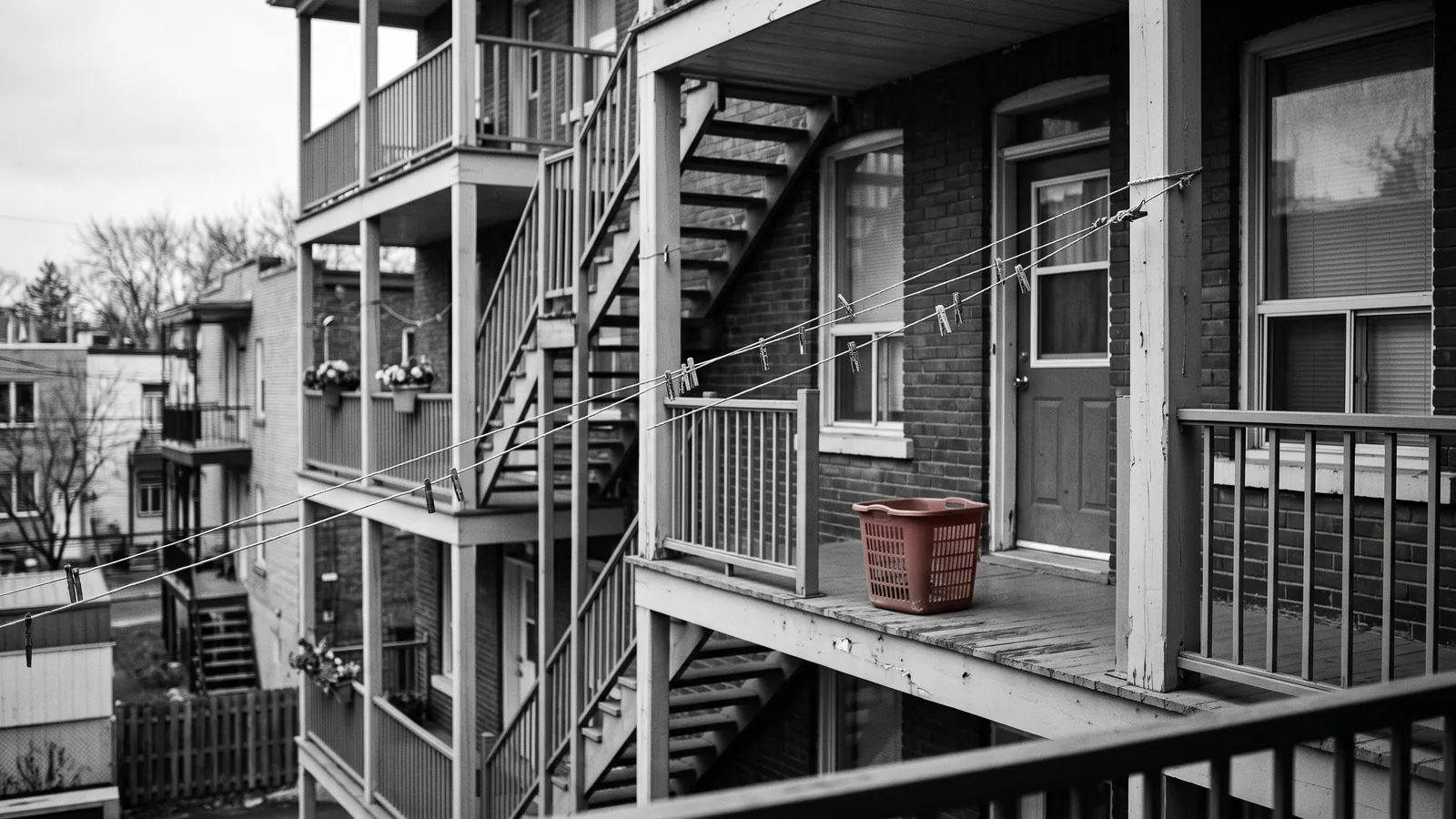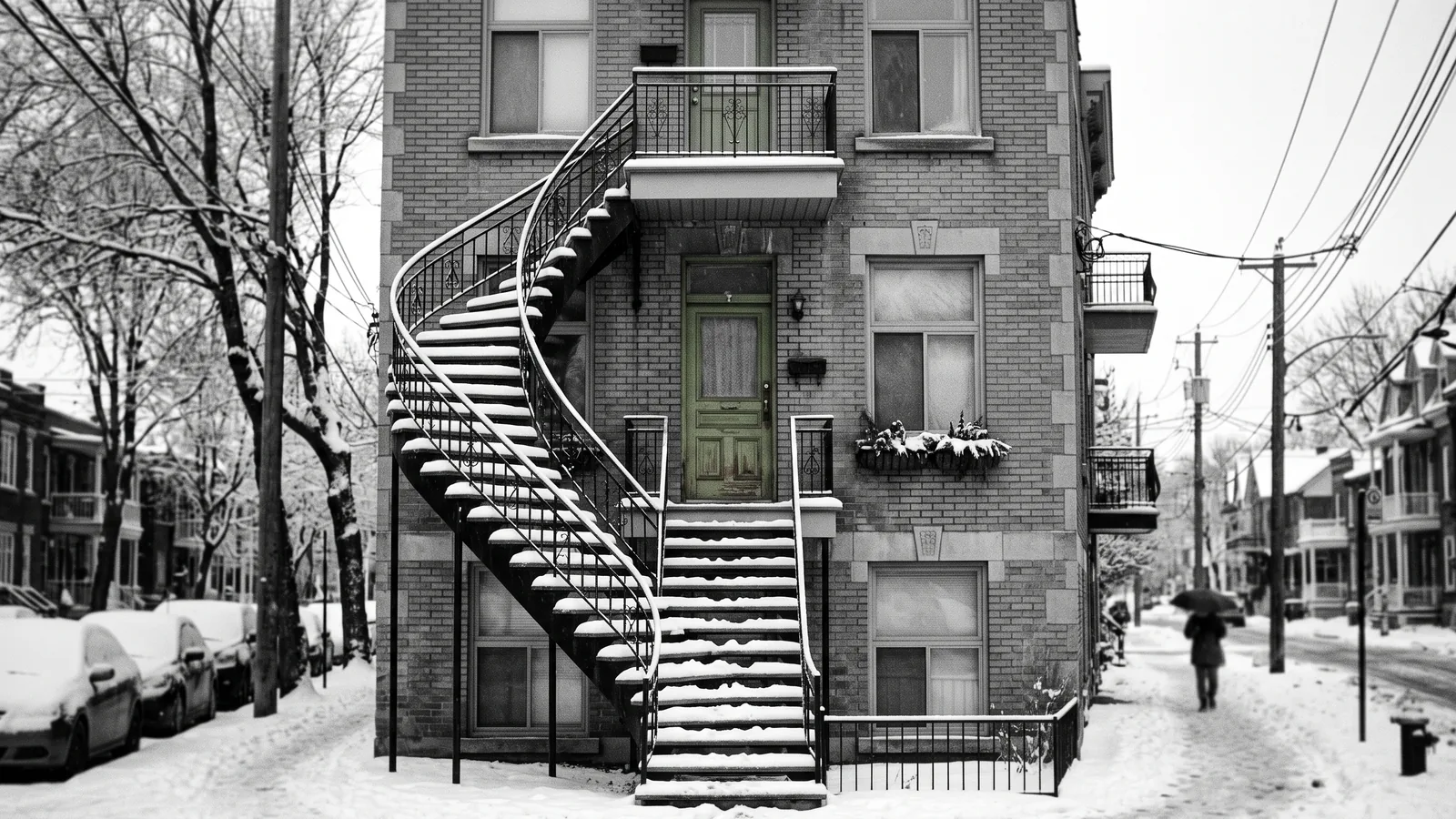
Some news reports strike a nerve because they embody, within a single building, an entire societal debate. That is the case with this piece by La Presse, published in September 2025, about a sixplex in the Plateau-Mont-Royal whose tenants say they felt « dispossessed » of their dwelling. According to the newspaper, the landlord allegedly applied pressure and sent notices of major work while a moratorium targeting certain evictions was in force. The report's headline captures the tenants' state of mind: the determination not to give in. We are talking here about allegations reported in the media, not a ruling whose full text we have; we therefore present them with caution, using « according to the report » and the conditional.
This article is not meant to condemn anyone: it aims to dissect the mechanism that, in this kind of case, turns a strategy for « recovering » dwellings into an embarrassing headline and a major financial risk. Because behind this case lies a lesson that applies to every landlord in Quebec: emptying a building through pressure and work notices, when a moratorium is precisely trying to curb evictions, means exposing yourself to legal action, damages and a tarnished reputation — when a perfectly legal path exists to achieve your ends. This content is provided for informational purposes and does not constitute legal advice.
In this article
The facts of the case
Let us restate what the report says, without adding to it. The scene unfolds in the Plateau-Mont-Royal, one of Montreal's most sought-after — and most strained — neighbourhoods, where the gap between sitting rents and market rents can be considerable. The building in question is a sixplex, that is, six dwellings, several of which are said to be occupied by long-time tenants. According to La Presse, these tenants say they felt « dispossessed »: the feeling of watching their living environment slip away under the landlord's actions.
The landlord named in the report, Corey Shapiro, allegedly — again according to the newspaper — applied pressure on the occupants and sent notices of major work. The detail that fed the headlines is this: these actions allegedly took place despite the moratorium put in place to curb certain evictions. In other words, at the very moment when lawmakers were seeking to protect tenants against forced departures, occupants of this building found themselves, they say, under a form of pressure to leave. It is this apparent contradiction that makes the case so telling.
As we do not have access to a final ruling or to the whole file, we remain cautious about what the report does not settle: we presume nothing about the exact nature of the announced work, the landlord's real intention, or the outcome of any legal action. These are tenants' allegations relayed by a media outlet, not established guilt. We therefore stick to what is public: a Plateau sixplex, tenants who say they were dispossessed, pressure and notices of major work mentioned, and a moratorium in the background. That is amply sufficient to understand the legal principle at stake, and it is that principle, not the people, that concerns us.
Key takeaway
The heart of the matter is not a number: it is a tension. On one side, a landlord who would like, according to the report, to transform or reposition his building; on the other, tenants who refuse to be pushed out — and a moratorium that vindicates their resistance. Everything else flows from there.
Why it was done wrong: the legal mechanics
To understand why a strategy of this kind can backfire on a landlord, you have to grasp the logic of Quebec's rental law. Four pillars combine here, and each one adds a layer of risk.
1. The right to remain in the dwelling
In Quebec, a tenant in good standing benefits from the right to remain in the dwelling, set out in the Civil Code (notably at article 1936 C.c.Q., the Civil Code of Quebec). Concretely, as long as they pay their rent and meet their obligations, the tenant has the right to stay in their dwelling, and their lease renews. This is the foundation of the whole structure: a landlord cannot simply decide that a tenant must leave because their rent has become too low or because he wants to reposition his building. Evictions and repossessions are exceptions to this rule — and, like any exception, they are strictly framed. On the Plateau, where sitting rents often lag far behind the market, the temptation to bypass this principle is strong; that is precisely where landlords stumble.
2. The moratorium: a door deliberately closed
Following a reform adopted in 2024, Quebec introduced a temporary moratorium suspending certain evictions — in particular those based on the subdivision of a dwelling, its substantial enlargement or a change of use. The spirit of the measure is clear: to curb a wave of evictions that was pushing households out of already-pressured neighbourhoods. When a moratorium closes a door, seeking to achieve the same result through another one — by piling on, say, work notices or pressure — risks having the tribunal see it as a circumvention maneuver. The moratorium does not suspend every step; it targets specific grounds. But its very existence changes how a decision-maker will read a landlord's actions during that period. Because the exact terms and duration of the moratorium evolve, always confirm what is currently in force before relying on it.
3. Major work does not end the lease
This is the technical crux of the case. A notice of major work can require a tenant to leave their dwelling temporarily while the work is carried out, but it does not end the lease: the tenant keeps the right to move back into the premises, on the same terms, once the work is done. Using a series of work notices to make occupancy untenable and turn a temporary departure into a permanent departure diverts the tool from its purpose. When the real aim is to empty the dwelling in order to re-rent it at a much higher rate, one leaves the ground of legitimate work and enters that of disguised eviction — a ground that the law and the courts examine with suspicion. We detail this mechanism in our guide to major work and eviction in Quebec and in our analysis of illegal renoviction.
4. Harassment, the aggravating factor that weighs heavily
The fourth pillar is article 1902 C.c.Q., which prohibits the landlord — or any other person — from harassing a tenant in such a way as to restrict their peaceful enjoyment of the premises or to induce them to leave the dwelling. Harassment can take very varied forms: repeated pressure, thinly veiled threats, abusive or endless work, service cut-offs, incessant visits, intimidation. Without presuming what exactly happened in this sixplex, one understands why tenants who say they were « dispossessed » and under pressure describe precisely the type of situation that article 1902 seeks to sanction. Harassment can, on its own, give rise to damages, including punitive damages — see our article on harassment of a tenant in Quebec.
On top of these pillars comes the central lever: article 1968 C.c.Q. provides that a tenant evicted through a repossession or an eviction obtained in bad faith is entitled to damages for the harm suffered and, if the tribunal deems it appropriate, to punitive damages. This is what turns a circumvention strategy into a potentially very steep bill.
Why the Plateau context changes the reading
The location is not a detail. The Plateau-Mont-Royal concentrates exactly the ingredients that make a course of action suspicious: sitting rents far below the market, strong demand, and intense media coverage of housing issues. In this context, a decision-maker — like public opinion — will be all the more attentive to the consistency between the grounds invoked and the real intention. Work notices that land just as a moratorium is protecting tenants, in a neighbourhood where the rent-increase potential is enormous, paint a picture that the landlord will have to explain by something other than mere coincidence. Good faith cannot be declared: it is demonstrated through consistent actions.
Key takeaway
A course of action becomes illegal when it serves to evict rather than to carry out genuine work or occupancy. Four markers structure the analysis: the right to remain in the dwelling (art. 1936 C.c.Q.), the moratorium on certain evictions, the strictly temporary nature of major work, and the prohibition on harassment (art. 1902 C.c.Q.). Article 1968 C.c.Q. turns bad faith into damages.
The consequences: damages, punitive damages and reputation
When a course of action of this type is found to be abusive or in bad faith, the bill is made up of several items which, added end to end, explain why the shortcut almost always ends up costing more than the value one hoped to unlock.
Damages for the actual harm
First come compensatory damages, meant to put the tenant back, as far as possible, in the situation they should have been in. These typically include moving costs, the rent difference when they had to find more expensive housing — a particularly brutal gap on the Plateau —, the incidental costs tied to the forced move, and compensation for trouble, annoyance and inconvenience. Each item must be established, but their total climbs fast: finding new housing in such a tight market can mean hundreds of dollars more per month, often calculated over several years of lost lease.
Punitive damages, the penalty that hurts
To this may be added punitive damages. Their logic is different: they do not repair a loss, they punish a behaviour and seek to deter it, both in the offender and in other landlords tempted by the same maneuver. It is precisely because the law wants to deter disguised evictions and harassment that article 1968 C.c.Q. makes them possible. A course of action accompanied by marked pressure, in the middle of a moratorium period, is exactly the kind of case where a tribunal may deem it appropriate to award them. We explain the scale of these penalties in our analysis of fines and penalties for renoviction and illegal eviction.
Reputation: the cost that appears on no invoice
Finally, there is a cost that appears on no ruling, but that can exceed all the others: reputation. This case made headlines precisely because it features tenants ready to fight and a landlord named publicly. Once a name is associated with the word « renoviction » in a major daily, the mark remains: it surfaces in searches, it circulates in the neighbourhood, it sticks to every future project. For a landlord, an investor, anyone who must inspire confidence in partners, lenders or future tenants, it is a damaged asset that cannot be repaired with a cheque. Renovictions regularly make headlines in Quebec, and the media appetite for these stories is not waning — quite the opposite.
What should have been done: the legal path
Here is the part these reports never tell: there was a perfectly legal way to achieve the underlying objective, and it would have avoided the whole shipwreck. The question to ask, upfront, is always the same: what is the real objective?
If work is genuinely necessary
If the building genuinely needs major work, the landlord can do it — while respecting the rules: proper notice, necessity of the work, strictly temporary departure, the tenant's right to return on the same terms. The key is consistency: genuine work, carried out and then followed by the tenants' return, poses no problem. It is when the work becomes the means of a permanent departure that everything goes off the rails. A landlord acting in good faith documents the necessity of the work and facilitates the return; he does not use it as a lever of pressure.
If the real objective is to optimize or re-rent: the voluntary agreement
In the vast majority of cases where a landlord wants to « recover » dwellings on the Plateau, he actually has no one to house there and no structurally indispensable work: what he wants is to bring back to the market dwellings frozen far below their value. For this objective, the tool is neither the work notice nor the repossession — it is the voluntary agreement, commonly called cash for keys (or cash for raise when what is negotiated is an accepted increase rather than a departure).
The principle is simple and perfectly legal: the landlord offers the tenant compensation in exchange for their departure on an agreed date. The tenant is free to accept or refuse; if they accept, both parties sign a clear agreement to terminate the lease. There is then no ground to justify, no burden of proof, and no possible challenge, since the departure rests on consent, not on constraint. The law allows the parties to end a lease by mutual agreement; that is exactly what cash for keys does. For the full mechanics, see our Cash for Keys page, our Cash for Raise service and our rent optimization approach.
The contrast, in one sentence
The shortcut path: you stack up work notices and pressure, a tenant feels « dispossessed », the case ends up in the newspaper and before the tribunal. The voluntary agreement: you make an offer, the tenant freely accepts, everyone signs — and there is nothing to challenge, because no one was deceived or forced.
The fundamental difference is not only legal, it is human. In one case, a decision is imposed on someone under a form of constraint; in the other, they are presented with an offer they are free to evaluate. It is this freedom of the tenant that shields the agreement from any accusation of bad faith or harassment. And when a landlord instead invokes real occupancy by a relative, it is good-faith repossession that applies — never a pretext of work.
Why go through professionals
One might think, at this stage, that it is enough to « not overdo it » to avoid trouble. That is true in principle, but the Plateau case is a reminder of a more subtle reality: the landlords who end up in the headlines are not all cynics. Many simply wanted to move fast, alone, and crossed a line without gauging where it lay. One notice too many, a clumsy bit of pressure, bad timing — in the middle of a moratorium —: that is often how a hazy intention turns, in the eyes of a tenant and then a tribunal, into disguised eviction or harassment.
This is where a firm specialized in voluntary agreements changes everything. Its role is not to « get around » the law — on the contrary: it is to structure the process so that it stays, at every step, on the right side. That means assessing the situation realistically, approaching the tenant properly and without pressure, negotiating compensation that makes sense for both parties, and sealing it all in a written agreement that protects landlord and tenant alike. You replace improvisation and a power struggle with a proven process and clear consent.
The Opti Loyer model: pay only for results
At Opti Loyer, we do exactly this work: helping landlords recover and optimize their dwellings through voluntary agreements, within the framework of the Administrative Housing Tribunal (TAL). The initial analysis is free: together we look at the dormant value of your building and the feasibility of an agreement, with no commitment. And the model is pay only for results: you only pay if the agreement is concluded and you get the result. The financial risk rests on us, not on you.
It is also a way to protect what cannot be bought back. A landlord has only one name in life: gambling it on a shortcut that can end up in the headlines, as in this Plateau sixplex, is a losing bet even when you « win » in the short term. The legal path seems slower, but it is safer, more profitable once all the risks are counted, and it leaves everyone standing. If you want to understand why it is better to entrust this to specialists, read our article on why go through a pro to recover a dwelling.
The lessons to take away
This Plateau case comes down to a few simple lessons, ones that too many landlords learn the hard way:
- A work notice is not a lease termination. Major work at most imposes a temporary departure; the tenant keeps the right to return. Turning it into a lever for permanent departure means slipping into disguised eviction.
- The moratorium changes the reading of every action. Seeking to empty a building while a measure protects tenants means handing the tribunal — and the public — a ready-made story of circumvention.
- Harassment is sanctioned separately. Repeated pressure can, on its own, give rise to damages, including punitive damages, regardless of the fate of the work invoked.
- A botched renoviction costs tens of thousands of dollars. Compensatory damages, punitive damages, a legal battle and reputation: the bill almost always exceeds the value one hoped to unlock.
- The legal path exists and delivers the same result. When the objective is to optimize or re-rent, the voluntary agreement — cash for keys — reaches the goal without any of the risks of a forced course of action.
At bottom, these cases all tell the same story: a landlord who wanted to force a result through the back door, when the front door was open. Major work serves to renovate, repossession serves to occupy; to recover and optimize a dwelling, the tool is the voluntary agreement. Choosing the right tool, from the very start, is the difference between a profitable, discreet operation and a headline you never really get rid of.
This content is provided for informational purposes and does not constitute legal advice. The facts presented come from a news report; they are unsettled allegations, reported with caution using the phrase « according to the report » and the conditional. The rules, the moratorium and the Administrative Housing Tribunal's benchmarks evolve — confirm the terms currently in force or consult a legal advisor before acting.