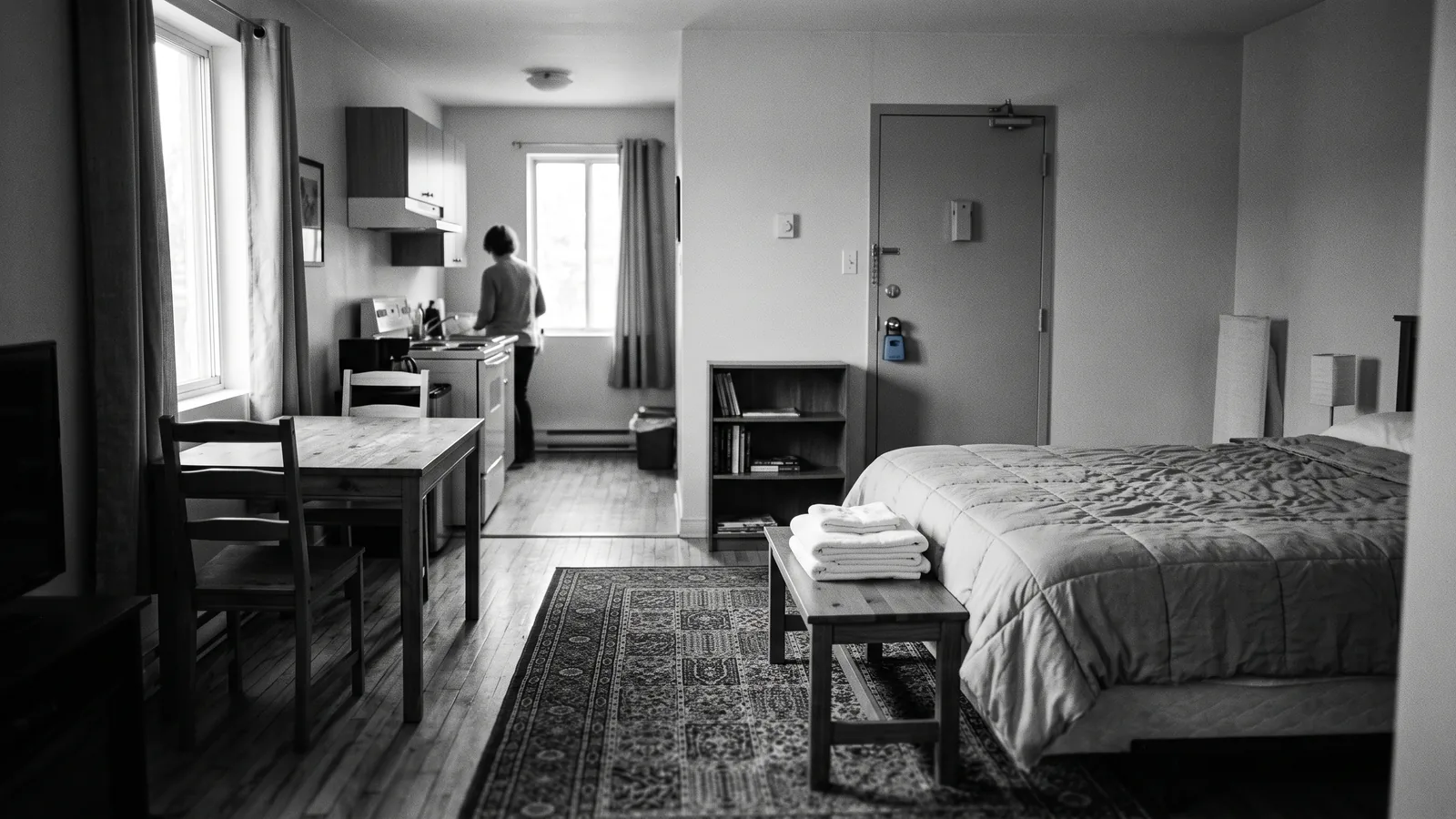
Short-term tourist rental has become one of the most closely watched areas of Quebec’s real estate market. Cities and boroughs are tightening their by-laws, the government has strengthened oversight, and the platforms themselves are now required to verify certain information. In this context, a review of the case law published by SOQUIJ highlights a lesson that many landlords — and tenants — would do well to know: to establish that a dwelling is being illegally operated for tourist purposes, it is not always necessary to catch vacationers on site. The mere fact of listing the dwelling on a platform like Airbnb, even with a calendar that appears « fully booked » or blocked, can be enough. This article breaks down that lesson, explains why these schemes go wrong, and recalls the legal way to increase a dwelling’s yield — without staking your reputation on a shortcut.
In this article
The facts: what the case-law review reveals
The starting point is not an isolated case, but an overview: in May 2024, the SOQUIJ blog reviewed several decisions dealing with tourist accommodation carried out without the required registration. This kind of review has great practical value: rather than a single, anecdotal case, it reveals a trend in how the courts approach the question. And that trend is clear.
What stands out from the reported decisions is that proof of illegal operation is often established from elements accessible to everyone: the listing published online, the photos of the dwelling, the reviews left by former guests, the description of the dwelling presented as a place to stay, and the booking calendar. In other words, the operator who thinks they are protected because « no one is on site on inspection day » is aiming at the wrong target: the digital trail they leave behind speaks for them.
One detail is especially telling. You might think that a calendar showing « fully booked » or blocked dates actually demonstrates the absence of rental — « look, it’s never available ». According to the reading that emerges from the reviewed case law, the argument backfires on whoever invokes it: an occupied calendar can just as easily reflect sustained activity as a desire to conceal the real bookings. The very fact of keeping an active listing attests to an offer of tourist accommodation.
The key lesson: the listing is often enough to prove it
The heart of the lesson comes down to one sentence: the burden of proof, to establish tourist operation, is easier to meet than one imagines. In a classic dispute, people think « caught in the act »: it would take an inspector who observes travellers, a key handed over, a transaction. The reviewed case law shows that this is not indispensable. The full set of clues — the online listing, its persistence over time, guest reviews, the presentation of the place as transient accommodation — can form circumstantial proof that is solid enough.
Purely by way of illustration, here is the kind of elements that, put end to end, sketch out the operation in the eyes of a court, without any « guest » having to be intercepted:
This way of reasoning has a direct consequence for the « not seen, not caught » strategy. Hastily pulling a listing on the day a complaint is filed does not make the screenshots already taken disappear, nor the archived reviews, nor the history. And since municipalities and the ministry now have more sophisticated monitoring tools — not to mention reports from fed-up neighbours — the non-compliant operator does not have the control they think they have over the discovery of their activity.
The logic is ultimately the same as the one that governs other rental-world excesses: the shortcut seems discreet and harmless until the day it isn’t. That is exactly what we see in cases of illegal renoviction or bad-faith repossession: what the landlord thought they could quietly « sort out » ends up documented, proven and sanctioned.
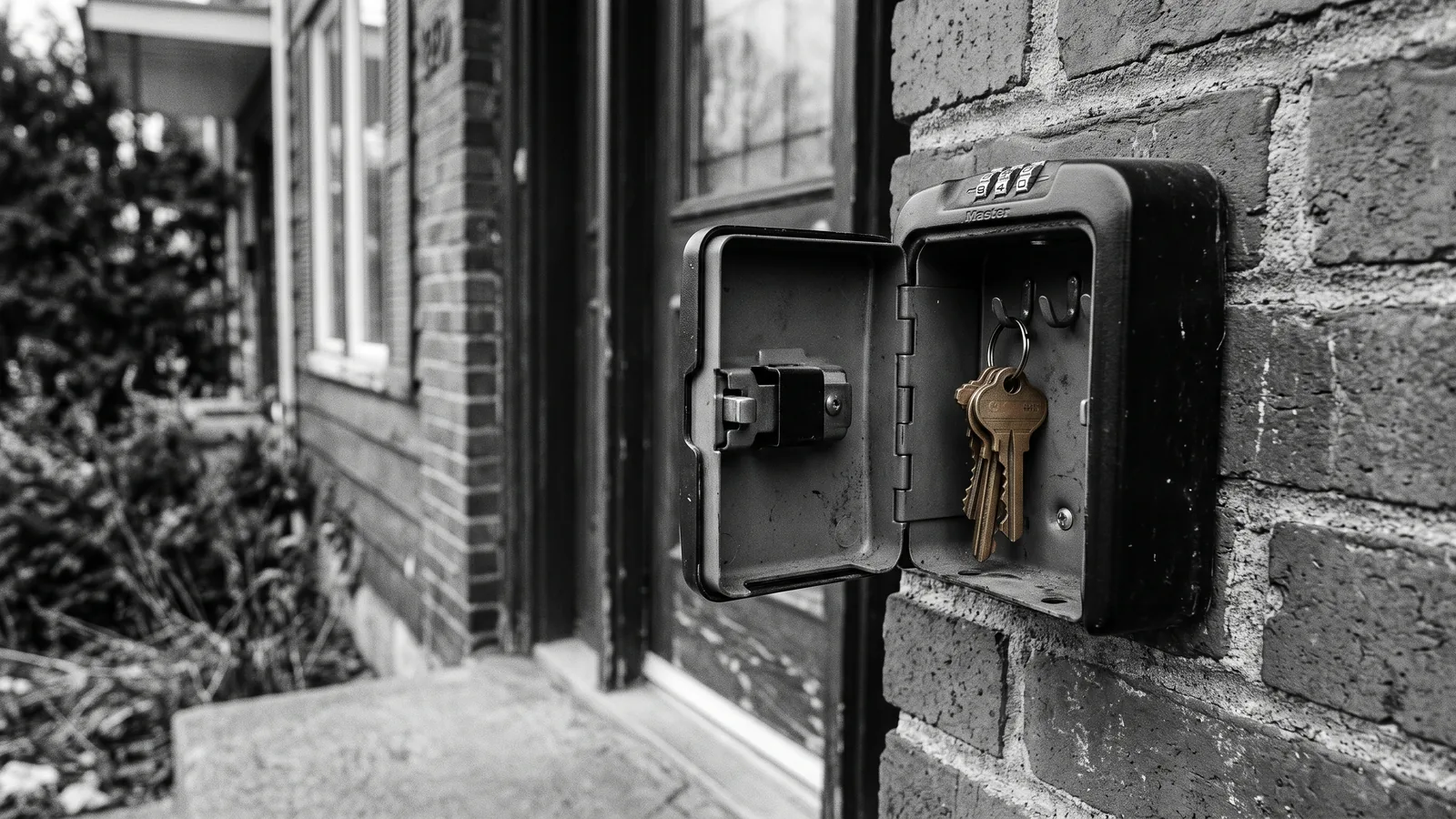
Why it’s illegal: the legal framework
To properly understand why these decisions fall on the side of illegality, you have to distinguish several layers of rules that stack up. Tourist accommodation is not « just renting »: it is a commercial activity governed by laws and regulations distinct from those of the residential lease.
Mandatory registration
In Quebec, offering short-term tourist accommodation to a transient clientele generally requires a registration number issued under the Tourist Accommodation Act. This number must appear in the listing, and platforms are required to verify and display it. Operating without this registration means offering a service that the law conditions on a registration you have not obtained: the infraction is constituted by the operation itself. The requirements and thresholds change over time; you must therefore confirm the terms currently in force with Revenu Québec and your municipality before publishing a listing.
Municipal zoning
On top of the provincial law, each municipality — and often each borough — sets its own zoning rules. In many residential sectors, short-term rental is purely and simply prohibited, regardless of provincial registration. A dwelling can therefore be « registrable » on paper while being illegal at the precise location where it sits. This is a double check that too many operators neglect: being in compliance with the province does not exempt you from being in compliance with the city, and vice versa.
The Civil Code: intended use of the property and subletting
When it is a tenant who puts the dwelling on Airbnb, an additional layer comes into play: lease law. The Civil Code of Quebec (C.c.Q. — the code of private law governing leases in Quebec) provides that you cannot, during the lease, change the intended use of the leased property (art. 1856). Turning a residential dwelling into transient accommodation is precisely such a change of intended use. To this are added the rules on subletting (art. 1870 and following), which notably require giving notice to the landlord: multiplying short-term stays without their consent and without registration piles up the breaches. These contractual faults can justify an application to terminate the lease before the Administrative Housing Tribunal.
When the landlord evicts to « Airbnb-ify »
There is one particularly risky scenario: the landlord who pushes a tenant out — through a false repossession, a sham renoviction or harassment — with the real goal of converting the dwelling into an Airbnb. Here, the illegality is compounded by bad faith. The Civil Code prohibits harassment aimed at making a tenant leave (art. 1902) and sanctions repossession or eviction carried out in bad faith with damages (the spirit of art. 1968). Invoking a non-existent occupancy motive in order to then operate the dwelling for tourist purposes means stacking two illegalities: the disguised eviction and the non-compliant accommodation. The calculation is catastrophic.
Tenant or landlord: who is targeted?
Illegal tourist accommodation does not have a single face. Depending on who operates it, the remedies and consequences differ — but the illegality itself remains.
The tenant who sublets on the sly
This is a common case: a tenant pays a modest rent and realizes they can make a profit by subletting the dwelling by the night on Airbnb, often without the landlord’s knowledge. For the landlord, the discovery is doubly unpleasant: their property is being used for a commercial activity they did not authorize, with the wear, risks and insurance problems that entails, and it is the tenant who pockets the difference. In this case, the landlord has real remedies — a formal notice, then an application to terminate the lease at the TAL (Tribunal administratif du logement, Quebec’s Administrative Housing Tribunal) — but they must absolutely go through the legal route. Reacting by changing the lock or cutting off services would tip them, in turn, into illegality.
The landlord who operates it themselves
Conversely, it is sometimes the landlord who pulls a dwelling off the rental market to operate it as an Airbnb without registration or zoning compliance. The reasoning is always the same: « I’ll earn more by the night than with a long-term tenant ». On paper, the calculation can seem appealing. In practice, it exposes the operator to all the penalties described above, and it rests on a fragile bet: that of never being discovered, even as the case law shows how easy the proof is to gather.
Key takeaway
Tenant or landlord, the principle does not change: operating a dwelling as tourist accommodation without registration and without respecting zoning is illegal, and the online listing is often enough to demonstrate it. The landlord wronged by a tenant, for their part, must defend themselves through legal channels, never by force.
The consequences: fines, damages, reputation
The legal penalty is only the visible part of the iceberg. The real cost of an illegal tourist rental is measured on several levels, and most of them escape the operator’s initial calculation.
Fines and orders
The Tourist Accommodation Act provides for fines for operating without registration, and these fines can add up per day of infraction — so that an activity maintained for months translates into a bill that swells fast. Add to this the municipal zoning infractions, with their own penalties, and the possibility of orders to cease the activity. We are not putting forward a specific amount here, because the scales depend on the applicable regime and change over time; the essential thing to understand is that the « per day » logic turns an infraction that seemed minor into a hefty bill.
Damages in the event of eviction
When the illegal Airbnb was made possible by a tenant’s forced departure, the damages component is added. The tenant evicted in bad faith can claim compensation, including punitive damages intended to discourage this type of behaviour — and they can often do so even after having left the premises. Our analyses of recent TAL trends show it: the courts no longer hesitate to sternly sanction disguised evictions. On this subject, see our feature on the renoviction fine in Quebec.
Reputation, insurance and co-ownership
Finally, there is everything that is not immediately quantifiable but weighs heavily. A public dispute over an illegal Airbnb leaves traces: articles, accessible decisions, word of mouth in the neighbourhood. The neighbours or the co-ownership syndicate may get involved, a declaration of co-ownership frequently prohibiting this type of use. Home insurance, for its part, may refuse to cover a loss that occurred during an undeclared commercial operation. And for a landlord who holds several buildings or who relies on their credibility with lenders, a tarnished reputation often costs far more than the fine itself.
What should have been done: the legal route
Behind the temptation of the clandestine Airbnb, there is almost always a perfectly legitimate objective: increasing a dwelling’s yield. A rent frozen far below market, an underused asset, an entirely understandable desire to make your building work. The problem is not the objective; it is the means. And the good news is that there are legal means that achieve the same goal without the risk.
Cash for raise: raising the rent, amicably
When a dwelling is occupied by a good tenant but the rent is stuck below market, the most elegant route is not to make them leave: it is to negotiate an agreed increase. Cash for raise consists of agreeing with the tenant on an increase in exchange for consideration: the landlord brings their rent closer to market, the tenant stays put and comes out ahead. It is a voluntary agreement, so no imposed motive and no possible challenge — the exact opposite of the risky gamble of non-compliant tourist operation. Learn more on our cash for raise page.
Cash for keys: recovering the dwelling, cleanly
When the objective is instead to recover the dwelling — to renovate it, bring it up to standard and re-rent it at its fair value — the appropriate tool is cash for keys: an amicable lease termination, where the tenant agrees to leave on an agreed date in exchange for compensation. No one is forced, everything is in writing, and there is no false repossession, no false motive, no illegal operation to hide. The dwelling comes back to the landlord in a clean and unassailable way, ready to legally generate its full value. We explain the full method in our guide « How to do a cash for keys ».
Optimization, by the rules
Between these two options, there is a whole range of legal adjustments: reviewing the included services, improving the dwelling to justify a higher value, correcting an undervalued rent over successive renewals. This is the heart of well-executed rent optimization. None of these avenues requires tipping into illegal tourist accommodation; all of them create value without exposing the landlord to a fine or a dispute.
Key takeaway
The objective — more income — is legitimate; the illegal Airbnb is the wrong means of getting there. The legal route exists and is often more profitable: cash for raise to raise the rent, cash for keys to recover the dwelling, optimization to adjust. Zero fines, zero challenges.

Why go through professionals
You could sum up everything above in one sentence: these cases prove that a shortcut costs tens of thousands of dollars — and, often, something far harder to repair, one’s reputation. A landlord who single-handedly cobbles together an Airbnb conversion, a false repossession or a disguised eviction is betting on their ability to avoid getting caught. The reviewed case law shows that this bet is a bad one: the proof is easy to gather, the penalties add up, and the landlord’s name ends up associated with a dispute.
This is precisely where professional support changes everything. At Opti Loyer, we do just one thing, but we do it by the book: we help landlords recover and optimize their dwellings through voluntary agreements, in compliance with the TAL framework and applicable laws. No false repossession, no clandestine Airbnb, no showdown: negotiated, written and unassailable agreements.
And the model is aligned with your interest. The initial analysis is free: together we look at the dormant value of your building, with no commitment. Above all, we are paid only for results — you only pay if the agreement is reached and you obtain the result. The financial risk of the process rests on us, not on you. It is the exact opposite of the illegal shortcut, where it is you who carries all the risk for an uncertain gain.
There is one sentence that sums up our approach: you only have one name in life. One more dwelling rented by the night is not worth staking it on. Do the analysis, honestly compare the real gain of the legal route to the real cost of the shortcut: in the vast majority of cases, the clean route is also the most profitable.
Tourist accommodation has its place in Quebec — but within a precise framework, with registration, zoning compliance and respect for lease law. The moment you step outside it, the case law reviewed by SOQUIJ is a blunt reminder: the mere existence of the listing can be enough to bring the scheme down. To increase a dwelling’s income, there is thankfully no need for this gamble: the voluntary agreement does the job, legally and without risk. The right instinct is simple: a below-market dwelling is not quietly « Airbnb-ified », it is optimized by the rules.
This content is provided for informational purposes and does not constitute legal advice. Laws, municipal by-laws and penalty scales change — confirm the terms currently in force with Revenu Québec, your municipality and the TAL, or consult a legal advisor.